
Landscape architecture is not just about designing beautiful spaces. It’s about creating environments that shape behavior, foster equity, promote well-being, and serve the greater community. Through his personal journey and professional lens, Ryan Seacrist, Vice President – Principal at RVi, explores the deeper purpose of the profession: to act as stewards of space, society, and sustainability.
Ryan Seacrist on His Path to Landscape Architecture
In the landscape architecture industry, we often hear fascinating stories about how our peers discovered the profession during the exploratory haze of early college life and in finding one’s own interests. My story, on the other hand, is rather boring, direct, and beginning to turn the corner on becoming an anecdote that gives away my age as an “Elder Millennial.” During my quest to make a single bet on the career that would carry me through life, my high school guidance counselor handed me a standard-issue hardcopy of the United States Occupational Outlook Handbook—the ultimate guide to early adulthood decision-making in its day.
With Blink-182 likely blaring in the background, I leafed through the Handbook like it was the Yellow Pages, in search for something that combined creativity, design, and real-world problem-solving. The book was organized alphabetically with “architecture” appearing as one of the first professions that fit my requirements. In the description, I recall vividly, it read: “Architecture (not Landscape- or Marine-).”
With scholarship opportunities available in my home state of West Virginia, I proudly announced to my family that I had made the choice to major in Architecture. Shortly thereafter, I discovered that there were no accredited architecture schools in the state. So, I made my first change order and revised my plans to ultimately pursue a degree in Landscape Architecture (not Building- or Marine-) at West Virginia University.
After earning my bachelor’s degree, my early career focused heavily on public work, such as parks, civic spaces, and corridor studies, which shaped how I see the role of landscape architecture in the public realm. Even as I moved into private development, I’ve continued to prioritize community benefit through projects that function as civic anchors. Whether it’s a town center or a mixed-use space, I believe landscape architects shine when we bridge private development with public value.
Landscape Architecture Influences Social Behavior, Emotion, and Belonging
Well-designed parks and public spaces don’t just look nice—they invite people to engage with the land, connect with their neighbors, and support local businesses. These spaces become platforms for community-building, cultural expression, and even activism. They offer more than recreation; they become stages for shared experiences and social engagement.
We also understand the power of appearance. The Broken Window Theory suggests that when a place looks blighted—broken windows, overgrown landscapes, distressed facades—it signals a perceived lack of care, which can invite further neglect and impact how people treat each other and their environment.
I have seen this firsthand throughout my career. In Tampa, Florida, one of our teams is leading a city-funded tree planting initiative in historically underserved neighborhoods. Yes, it is part of a larger economic development effort, but more than that, it is about restoring a perception of care and real comfort to daily life. Without tree canopy, walking in the Florida heat becomes uncomfortable and even unsafe. By planting trees, we are not just improving aesthetics—we are making communities feel cooler, safer, and more welcoming. Research from Yale and others supports this: Adding greenery can reduce stress, increase social connections, and even lower crime.
As landscape architects, we have the power to influence how people feel in their environments. When we identify neglected areas and redesign them to be safe, functional, and beautiful, we invite belonging. We create spaces that earn respect, build pride, and shift how communities see themselves and how the world sees them.
Landscape Architecture Plays a Vital Role in Advancing Accessibility and Equity
Landscape architecture shapes how people move through the world and how welcome they feel along the way. One of the most meaningful aspects of this work is improving access to opportunity, connection, and community. At its core, our responsibility is to design places that are accessible, safe, and inclusive. Some of the more meaningful projects I’ve worked on in my career involved something as simple as the completion of existing neighborhood sidewalk networks. One slab of five-by-five-foot concrete at a time is all it may take to mend a patchwork of disconnected pedestrian pathways. However basic that may seem in application, the result can solve a myriad of complex issues stemming from what may have originally been a treacherous last-mile trip to and from common personal and societal needs such as transit, a place of work, or even the corner grocery store.
Simply stated, when we design with accessibility in mind, we help level the playing field. For someone without financial or social resources, a well-designed public space can be a gateway to jobs, education, healthcare, or social support. Even in private sector work, the spaces we create often become shared community assets—like streets, plazas, and parks—that help shape the public realm. Accessibility is about more than transportation. It’s about creating environments where people can move through their communities with ease, dignity, and a sense of belonging.
This includes feeling secure within our built environments. When we design open, visible, and welcoming spaces, we encourage public stewardship and protection. Thoughtful landscape architecture avoids hidden corners, incorporates intuitive lighting, and prioritizes comfort and connection over confinement. A park should feel like a place to play, gather, or reflect. A downtown square should flex seamlessly from a quiet afternoon space to a lively evening venue. It’s not just about looks; it’s about building the capacity for common pride, trust, and care into the places we share. The result is proud moments of civic infrastructure that strengthen communities, one human experience-focused decision at a time.
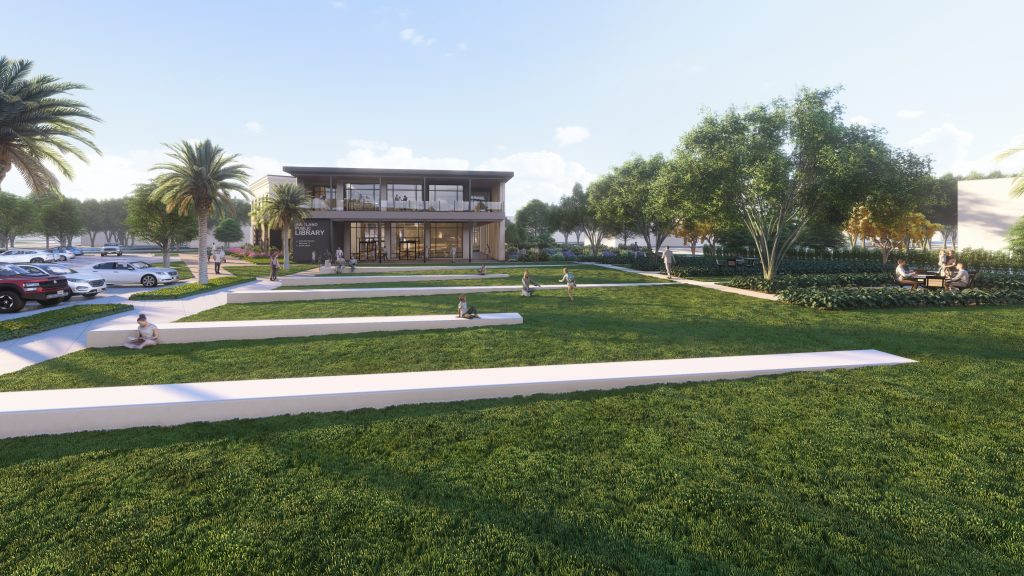
Through thoughtful landscape architecture, RVi is helping revitalize Maitland Library and Quinn Strong Park as a welcoming public space rooted in accessibility, equity, and community connection.
Landscape Architecture Encourages Us to Exercise Empathy
As landscape architects, we’re guided not only by professional codes of ethics from organizations and licensing boards, but also by personal ones. Every day, we face choices—whether we’re designing a space, coordinating with a client, or navigating complex regulations. We’re constantly weighing what’s easiest against what’s right. For me, that often means asking: Am I designing this space for the true benefit of the people who will use it? Is our team approaching this in a way that’s equitable, accessible, and responsible? Have we done everything we can to reduce risk and enhance the experience?
There will always be pressure to deliver efficiently and meet the bottom line. But the best design decisions are made not just with profit in mind, but with integrity, intention, and care for the public and the environment. In many cases, thoughtful design delivers better long-term value for both clients and communities. We can meet project goals without compromising on safety, sustainability, or equity.
At its heart, landscape architecture is a profession of empathy. We care for places, ecosystems, and the people who depend on them. Our work spans everything from backyard gardens to regional master plans, habitat restoration to civic plazas. No scale is too small, and no vision is too big.
The Connecting Power of Landscape Architecture
In many ways, landscape architects are the glue binding public and private spaces, connecting nature with the built environment. We weave together architecture, engineering, planning, and community vision into a cohesive physical form. We make spaces functional, beautiful, equitable, and resilient. And we think not only about how places look, but how they feel, how they work, and how they endure.
To my fellow landscape architects: let’s continue to advocate for the broad impact of our work. Let’s hold ourselves to the highest standards—ethically, creatively, and professionally. Let’s keep building spaces that serve the public well, spark joy, and inspire connection, because the world needs more of what we do, now more than ever.


Great story!! Ryan brings such a clear, experience-based perspective to what we do and where we need to go. He connects the craft to real outcomes, not just theory. That kind of forward thinking is what makes him such an amazing landscape architect and leader. Kudos, Ryan, for putting this out there and raising the bar!
Well said Ryan! Thank you for sharing your thoughts so well.