
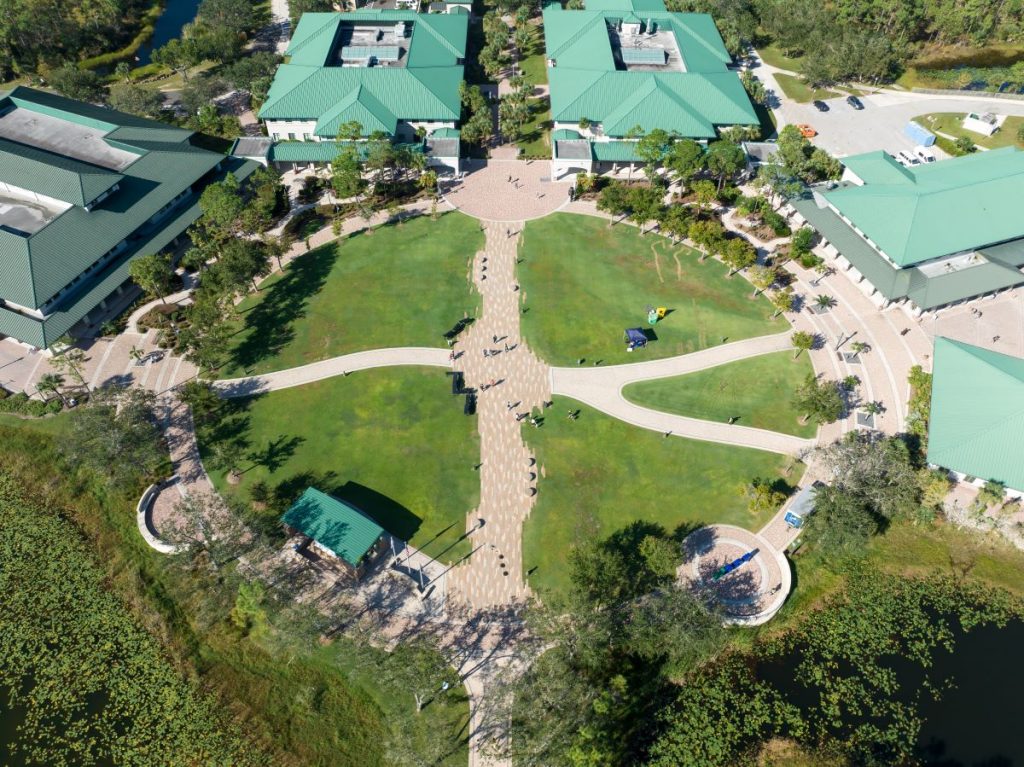
An interview with Christopher Miller, PLA, led by Tony Catchot, PLA.
Intentionally designed interstitial spaces are not filler; they’re critical infrastructure for learning, well‑being, and community. For RVi, they also serve as a measurable expression of the firm’s broader campus‑development ethos, integrating people, place, and purpose across diverse project types nationwide. In this interview, Tony Catchot, RVi Principal – Campus Sector, sits down with Christopher Miller, RVi Associate Principal – Campus Sector
Tony: Educational campuses are collections of many different types of spaces. When it comes to “interstitial spaces,”, can you tell us what that means in your own words, and what that may look like in a campus setting?
Christopher: Interstitial spaces are any place that students find themselves when they’re not in a prescribed activity, such as sleeping, eating, or sitting in class. These in‑between zones connect every part of the campus and enable different personalities to be part of the “whole” while being its own individual part—sometimes even being a separate part. These spaces can be quiet corners or lively crossroads where everyone can find their fit.
I recall working on a masterplan for an urban university where the campus was an enclave within the city. We framed the campus like many of the surrounding bungalow homes, concluding with three key spaces: The Front Porch, the Kitchen and the Back Yard. The university would welcome people on the Front Porch, make drinks and snacks in the Kitchen, and offer relaxation in the Back Yard. The Kitchen was full of interstitial spaces, kind of like the pantry and the bar.
Tony: Why are interstitial spaces so important, particularly in a campus setting?
Christopher: They form the unifying network of materials, patterns, and small moments of beauty that give a campus meaning. Interstitial areas are where students pause to digest a lecture, share an impromptu conversation, or simply breathe before the next burst of effort; in other words, interstitial spaces are the places that keep the academic engine running. When I was in college at the State University of New York, I would discover these places around campus and make them my own for a picnic. Passers-by would say, “Hey that’s a cool spot. Can I join you for some crackers & cheese?” These spots became our hangouts; a place where we could enjoy where we were and be more of ourselves. This effect is possible on all campuses of all sizes, nationwide and globally.
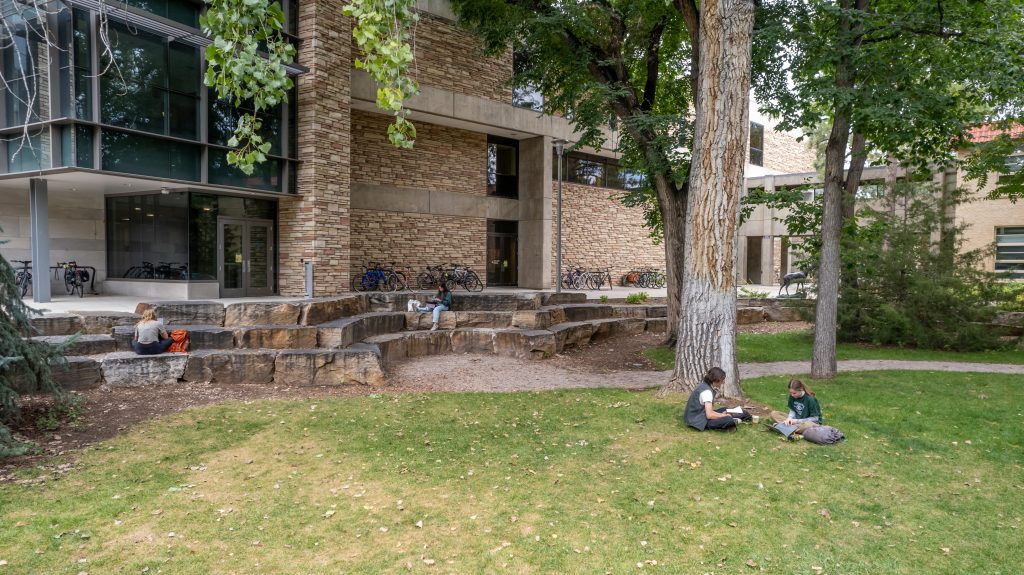
Students enjoying an interstitial space at Colorado State University’s Warner College of Natural Resources. Thoughtfully designed interstitial spaces can have a profound impact on the experience and academic success of students.
Tony: Do you think families and prospective students notice interstitial spaces when deciding where to enroll?
Christopher: Absolutely. People equate well‑maintained, comfortable, in‑between spaces with a campus that values safety, access, and attention to detail. It’s very much like the “broken‑windows theory,” but applied to student life instead of general residential living. Aesthetically pleasing interstitial spaces allude to safety and care, while disregarded interstitial spaces can evoke discomfort and fear.
Tony: Given their immense potential to positively influence and impact the experiences of students and others on a campus, how can campuses program interstitial areas effectively?
Christopher: Options range from linear, universally accessible corridors to shady gardens and contemplative groves. Interstitial spaces are ideal for wayfinding, brand storytelling, quiet study, or informal collaboration, including places to read, reflect, and embed knowledge into memory.
Tony: How can institutions afford to maintain more of these spaces, and maintain them better?
Christopher: Start with durable, straightforward construction, and match maintenance regimes to actual demand. Well‑executed simplicity lowers long‑term costs and keeps the experience high‑quality.
Tony: Who should oversee the design and upkeep of these spaces?
Christopher: Broad campus leadership should set quality standards, while individual districts adapt those guidelines to their specific goals. A campus‑wide strategy such as “Showcase your expertise” lets each department interpret the theme without sacrificing unity.
Tony: When designing these spaces, should every square foot look the same for consistency?
Christopher: In a word, no. Campuses are comprised of zones of different scales and functions, and site design needs to respond contextually. Even small projects can—and should—add distinct character while still supporting the overall brand. While in North Carolina, I had the privilege of working with the University of North Carolina at Chapel Hill on several projects across many districts on campus. From the UNC Health Hospital’s campus-in-a-campus, to Historic Polk Place and the Campus South District, each space had its own personality, but they all knit together to form a unified campus context.
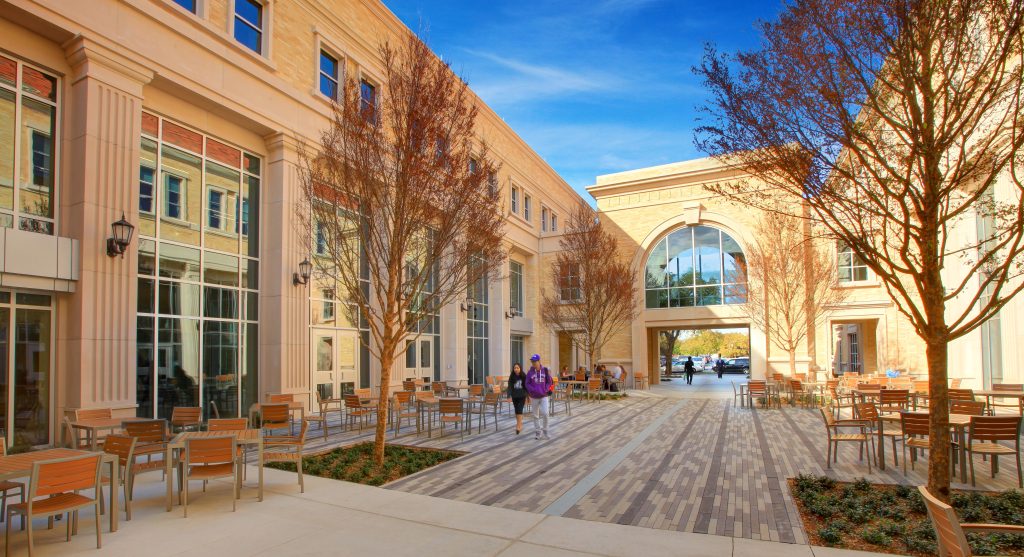
Campus Commons at Texas Christian University, Fort Worth, TX.
Tony: Thinking back on your own education and experiences on campuses, which spaces left the strongest impression on you?
Christopher: The ones where we could linger and build relationships, meet future friends and mentors, and even fall in love. Memorable interstitial zones foster pride and brand loyalty because they knit learning and living into one experience. Having worked at Cornell as an entry level science technician before entering the design profession, the historic campus was truly impressive. The formalized Ho Plaza with McGraw clock tower, the Slope, and the Cascacillia Gorge Trail were all memorable and specific to Cornell and the Finger Lakes region of upstate New York.
Tony: Can you share an example of a campus that’s “doing it right?”
Christopher: At RVi, we’ve had the privilege to work with Florida Gulf Coast University to implement their investments for over 15 years, in everything from a native‑plant entry sequence to a detailed plan for an academic spine. It’s proof that consistent, quality interstitial spaces express an institution’s commitment to student life. We continue to work there, developing new academic buildings with plazas, gardens, and gathering event spaces, as well as enhanced student life activities integrating the Student Union lawn and Alumni Legacy Plaza.
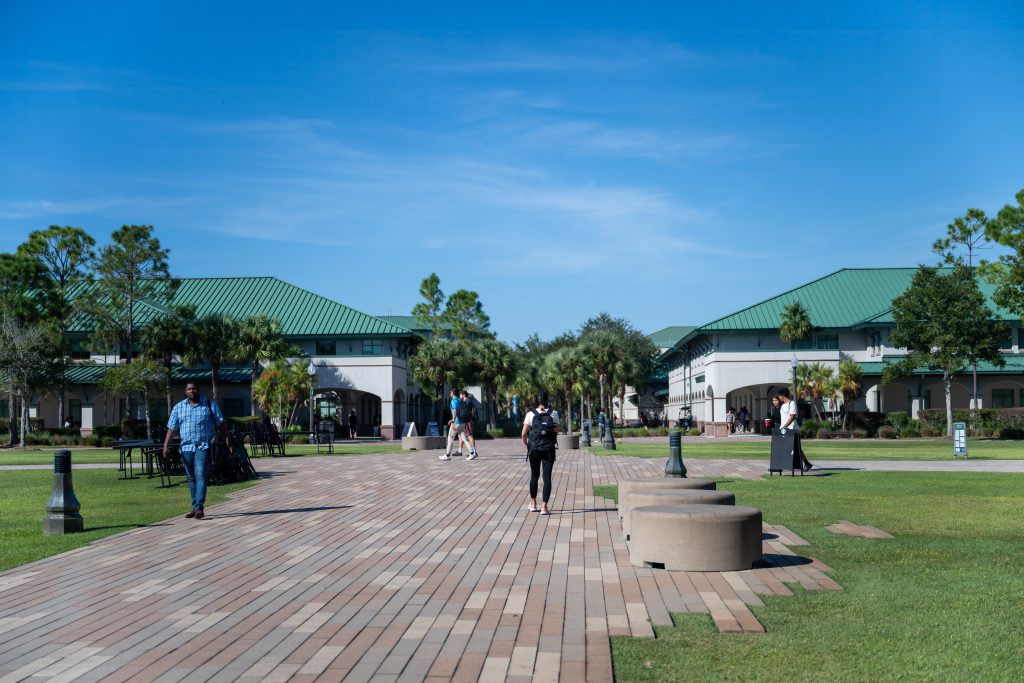
The Great Lawn at Florida Gulf Coast University.
Tony: What strategic steps are RVi taking to grow its Campus sector, and how will the firm strengthen these in‑between spaces?
Christopher: RVi is expanding into high‑growth regions and adding bench strength through targeted hiring, technology investment, and thought‑leadership outreach. Growth is iterative and fully supported by the firm, building team capabilities, raising brand awareness, and actively engaging with clients. All these things ensure that future campuses and their critical interstitial zones benefit from diverse experiences and continuous improvement. These interstitial spaces are a great place to start with new clients, often seen as low-hanging fruit. These smaller projects can offer a call to action for quality landscape architecture site-based improvements to help fulfill the student, worker, and visitor experience and well-roundedness.
Tony: Where does the “in-between” philosophy fit within RVi’s overall development strategy for its Campus sector?
Christopher: RVi defines a “campus” broadly—from higher‑education and research environments to healthcare and corporate settings. Across all of these, the goal is an interconnected community that encourages collaboration and discovery while remaining orderly, safe, and naturally conceived. Intentional interstitial spaces are the connective tissue that make this vision tangible on the ground. For RVi, they also serve as a measurable expression of the firm’s broader campus‑development ethos, integrating people, place, and purpose across diverse project types nationwide.


Interstitial spaces were interesting, intriguing, integral to my college experience. The commons were more memorable than the classrooms.