
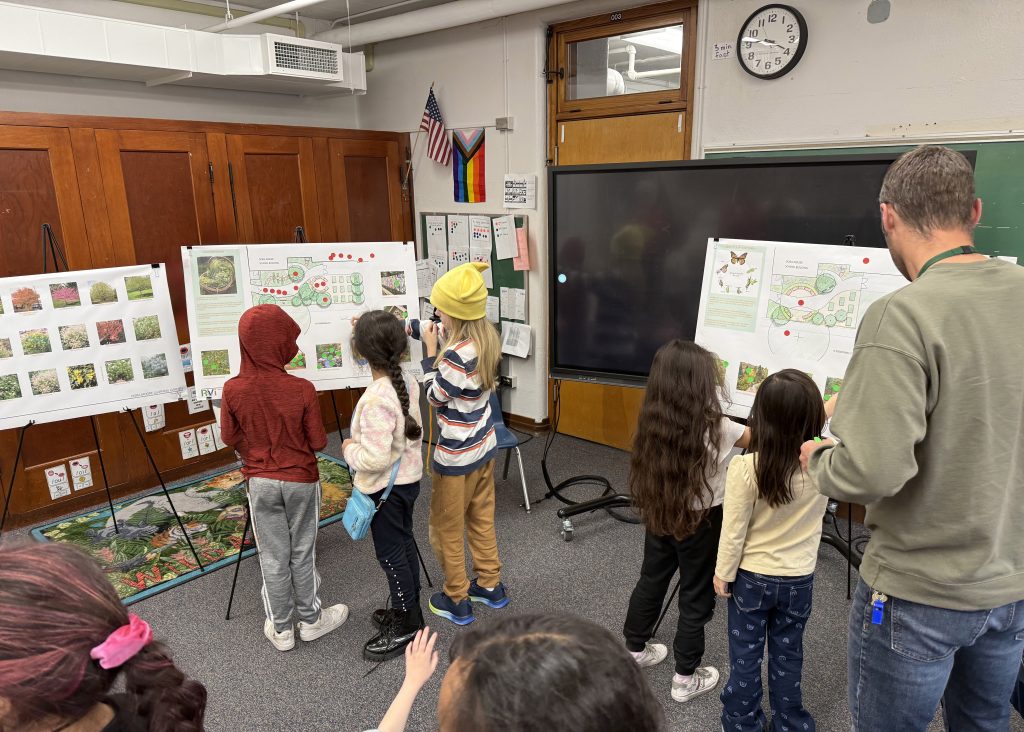
When RVi was invited to reimagine a patch of turf at Dora Moore Elementary in Denver, Colorado, the mission was clear: transform 1,700 square feet of underused turf with limited irrigation into a vibrant, educational space adjacent to the school playground.
But this wasn’t a typical landscape architecture project. While RVi Project Manager Nikki Garda and Landscape Architect Ryan Graycheck led the technical aspects, much of the vision, input, and enthusiasm came from the Climate Champions, Dora Moore’s second and third grade student council, committed to improving their school and community through environmental care.
A Collaborative Vision Rooted in Water-Wise Design and Student Imagination
The project was funded through a grant from Denver Water, who issued an RFP specifically for this turf conversion. RVi responded with enthusiasm, drawing on a strong, ongoing relationship with Denver Water and a history of supporting pollinator-focused, water-conscious landscapes across Colorado.
In February, the Climate Champions formally voted to transform the space and shared their goals through the RFP process. Their priorities? Efficient use of water runoff and a space that felt “comfy and cozy.” RVi presented two design concepts: one focused on farming and foraging, and another inspired by the lifecycle of a butterfly. Soil conditions, namely high levels of arsenic, made the edible gardening option infeasible, but the team found a creative solution.
“The kids were excited to grow their own food, but the soil ruled that out,” said Garda. “So, we compromised with raised beds and trellises to grow non-edible plants like loofahs. They loved the idea of harvesting their own ‘SpongeBobs,’ so it was a fun and successful adjustment.”
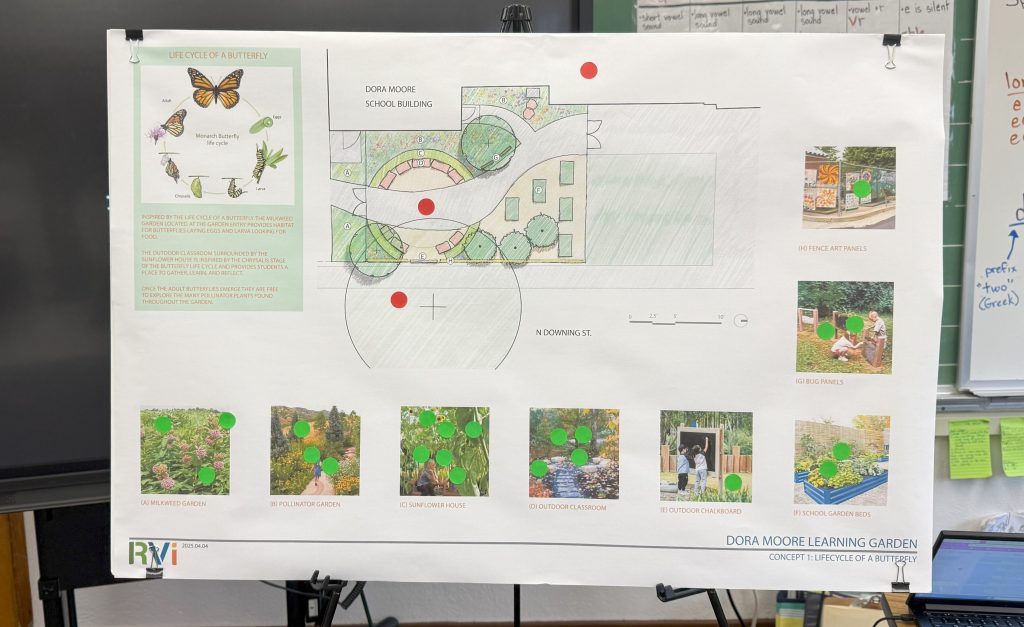
The final Butterfly Lifecycle Concept, with students contributing their input by voting on various design elements and features.
The final Butterfly Lifecycle Concept incorporated student feedback, allowing them to vote on elements like shaded seating, pollinator-friendly plants, and quiet areas for rest and reflection. Teachers and staff supported the process, but let the students take the lead in shaping their vision.
“We incorporated their input using colorful graphics and simple visuals,” said Garda. “They were genuinely excited to understand how the design was coming together and full of great questions about the construction process.”
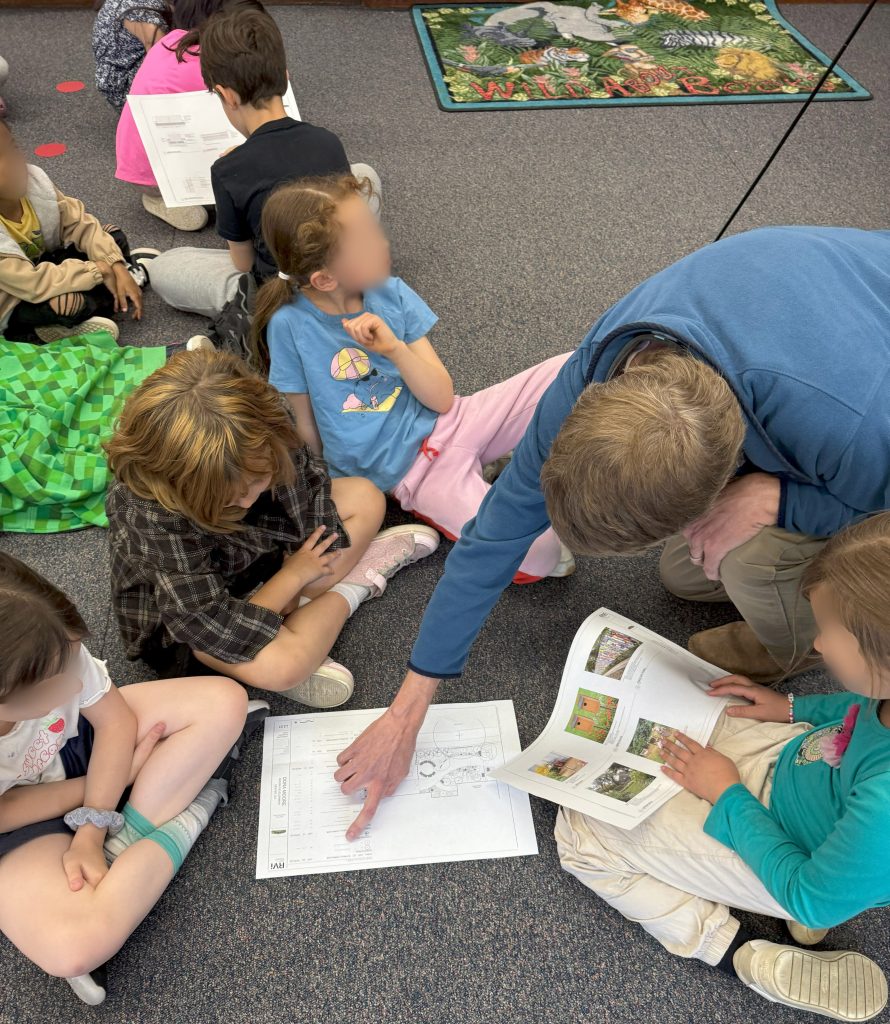
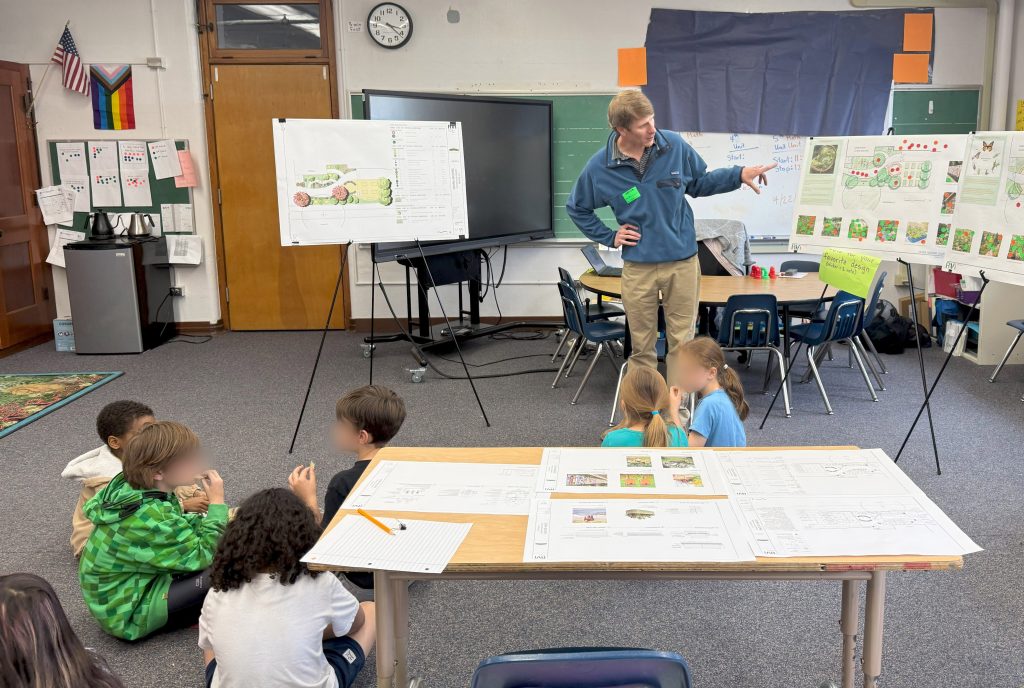
RVi Landscape Architect Ryan Graycheck explaining various aspects of the design plan to captivated students.
From Turf to Habitat: Engineering for Environment and Experience
The original site was dry, patchy, and plagued by runoff from a nearby downspout, making irrigation difficult. Garda and Graycheck focused on turning that challenge into an asset-designing for water infiltration and improving soil conditions through permeable materials like decomposed granite and mulch.
To support the students’ request for shade and visual interest, the team helped them select native trees with vibrant seasonal blooms. Boulder groupings were incorporated to illustrate natural cycles and reinforce learning opportunities. Existing flagstone pavers will be reused to create a meandering pathway through the planting areas.
One design constraint was maintaining a clear sightline for the school’s security camera. The team carefully selected vertical features that added interest without blocking the view, balancing safety and creativity.
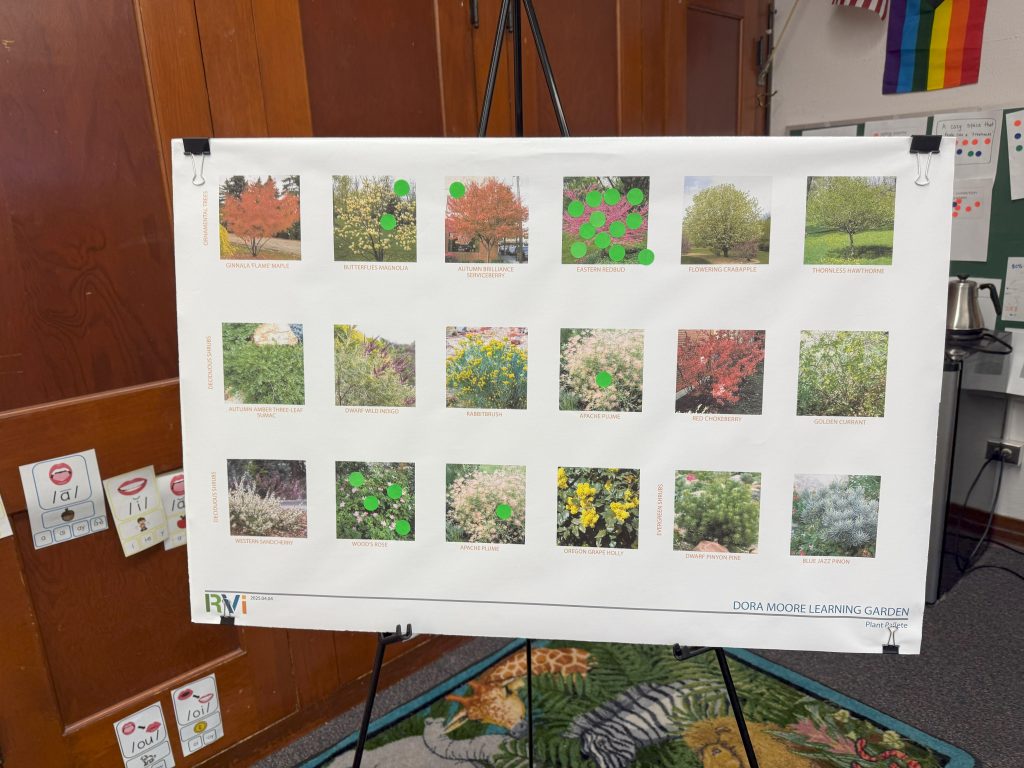
Students wanted trees that would add shade as well as striking visual elements to the school’s new outdoor space.
Building a Space for Learning, Stewardship, and Joy
Local contractors stepped in to support the project, donating services and collaborating with students during tree pit diggings and perennial planting. The community effort added to the garden’s energy, and to the students’ sense of pride.
“Working with the Climate Champions has been incredible,” said Graycheck. “Their excitement for improving their environment is inspiring. I hope this experience plants a seed that grows into a lifelong connection with nature-through play, learning, or stewardship.”
The Dora Moore Learning Garden broke ground in May 2025 and is scheduled for completion by the end of June. What started as a patch of struggling turf is now blossoming into a place of growth, both for the landscape and the students who shaped it.