
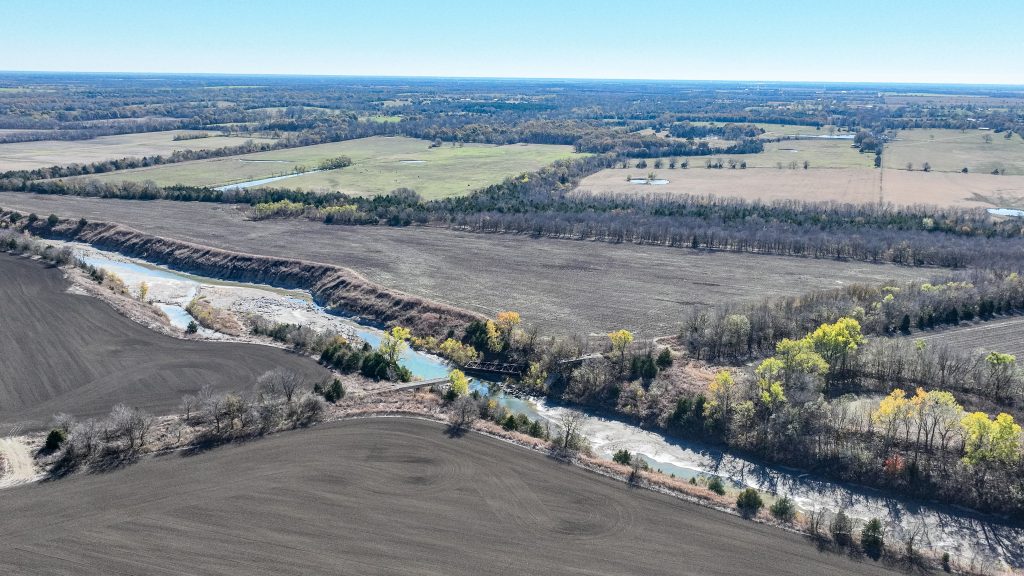
Project Spotlight: Northeast Texas Trail Feasibility Study
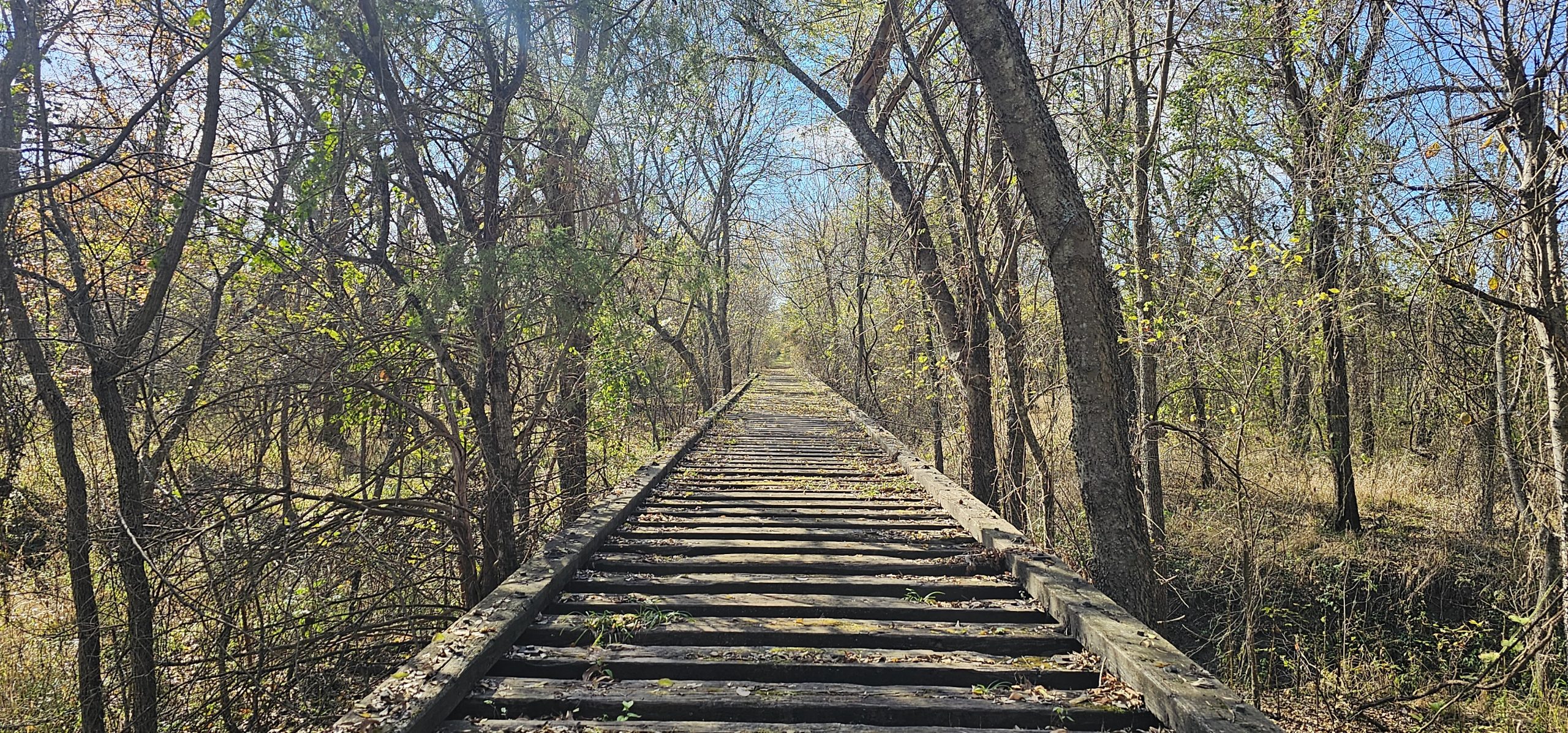
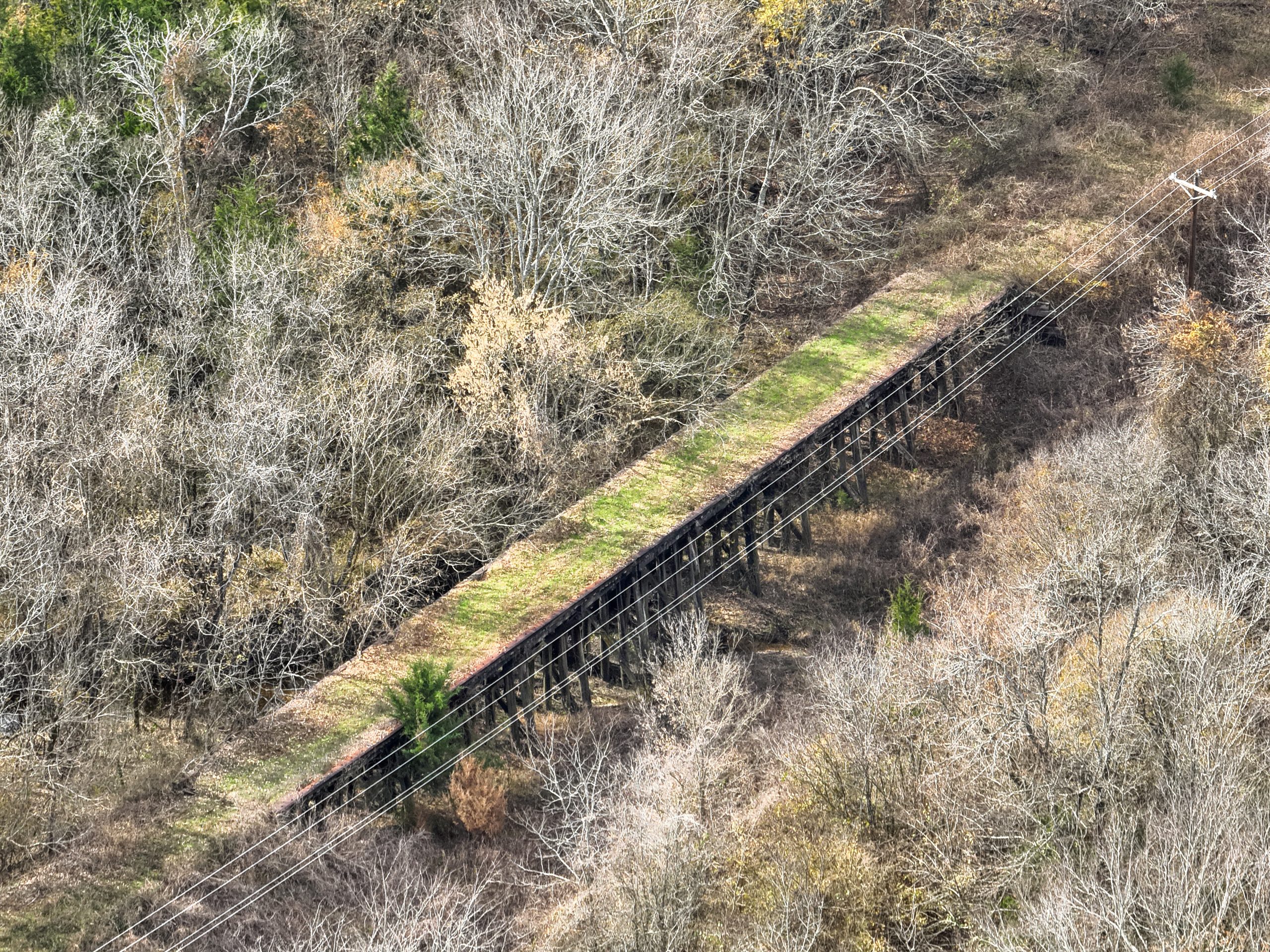
Texans will soon learn whether their state could gain its first linear state park. The Texas Parks & Wildlife Department (TPWD) tapped RVi to conduct a feasibility study on transforming the Northeast Texas Trail, also known as the NETT, into a state park. The NETT is a 130-mile rail-to-trail conversion running from Texarkana to East Dallas, with a halfway point in Paris, Texas. If TPWD Commission approves the park designation, the NETT will not only be the first linear state park, but also the longest hike, bike, and equestrian trail in the state, and the fourth-longest trail of its kind in the country.
Recognizing the need for the study
The seeds of the study were planted when the Texas Parks & Wildlife Department was approached by the Northeast Texas Trail Coalition after being awarded substantial funding from a Rebuilding American Infrastructure with Sustainability and Equity (RAISE) grant in 2022. The Northeast Texas Trail Coalition is a volunteer-based nonprofit organization of Northeast Texas community members who have been advocates and stewards of the trail since 2007. All eight railbank administrators who currently own and operate the trail are a part of the coalition. When they approached TPWD about converting the rail-to-trail into the first linear state park in Texas, TPWD first had to find out if it was a feasible venture for them to pursue, and if so, what that process would look like. Once RVi was assigned this project, the Austin RVi office partnered with the Denver RVi office to develop a report to advise TPWD in its decision
Developing the feasibility study
The study was directed by Drew Carman, Director of Park Design at RVi, who has experience working for TPWD in the past as a statewide park planner. While he led the project from Austin, Will Wagenlander and Nikki Garda served as the Project Manager and Deputy Project Manager out of the Denver office. Despite the distance between them, the team was able to maintain a seamless cross-office workflow while highlighting and applying their diverse talents and knowledge.
“I knew their planning experience would be invaluable to this project,” said Carman in regard to Wagenlander and Garda. “As far as our locations are concerned, a direct flight from Denver to Dallas [where the NETT ends] and the drive from our Austin office to Dallas are about the same in time. Texas is a big place, so sometimes we need to think outside the ‘geographic box’ in order to best serve a project.”
Carman and Wagenlander took about six months to develop a strong project scope, which ensured a smooth process. The study was divided into six chapters culminating into one final document:
- An overview of the NETT and more insight into the region
- Inventory and analysis of the site
- Case studies of similar projects in other areas
- The vision for the NETT, including plans and operational scenarios
- Economic implications, including costs, partnerships, and funding
- A framework for success in the future
Many studies of this nature tend to be long, lofty documents filled with technical terms and complex diagrams. RVi was intentional about taking a different approach. “This study consists of a massive amount of data and information,” said Carman. “Since it will be a public document, we wanted to make sure it would be easy to navigate, read, and understand. Nikki played a key role in organizing our findings and technical data into a document with compelling graphic design to make it easier to read and understand.”
Potential benefits of turning the NETT into a state park
A key case study for this project was Katy Trail State Park in Missouri, which many consider the crown jewel of rail trails in the Midwest. Wagenlander and Garda visited the park with TPWD staff to interview the Missouri State Parks staff and learn about the unique need of linear state parks. It runs across the entire state for about 400 miles, so it served as a good example of what may be in store for the NETT.
“Our visit to Katy Trail State Park showed us how towns actually benefited from having trails,” Garda stated. “The trail has been really important for rural communities struggling from a lack of economic activity. They’ve been brought back to life with trail users stopping through these areas. We saw a case where a town went from a few buildings to a charming, destination attracting numerous visitors due to its fantastic wines and natural beauty that were not fully recognized prior to the trail.”
Garda adds, “Communities along the NETT have already begun to realize the advantages of having a trail in their backyard. Hosting events, offering lodging, and making improvements to the trail have drawn in droves of people. If TPWD chooses to add this property to their portfolio, their investment paired with this community’s passion will result in a bright future for the nineteen towns along the trail.”
Foreseeing and resolving community concerns
The Katy Trail case study also showed the RVi team what common misconceptions people have of trails, and how the Missouri State Parks staff worked through those things with the community. Most of these misconceptions were tied to concerns about access and the environment.
“Property owners along the Katy trail were worried about who would be near their property and whether their property would be damaged,” Garda explained, “but most trail users are affluent cyclists that are more interested in protecting the trail and the environment it runs through. These areas have actually seen more safety benefits because more sets of caring eyes are watching over their property now.”
Missouri State Parks staff understood the need for and importance of community engagement in projects of this nature, so they employed a community coordinator position early when they turned a former spur of Katy Trail, Rock Island Trail, into a state park.
“The community coordinator was dedicated to trail communities,” Garda recalled. “He did a lot of research into community concerns and prioritized meeting people where they were to ensure all voices were heard. This was key to fostering positive, enduring relationships between Missouri State Parks staff and trail towns. It also influenced us to suggest the same position be created at TPWD early in the process of park designation, because we saw the importance of the community’s voice and participation.
Collaboration and technology help this study stand out
A unique factor about this project is that it could create a new type of state park within the Texas system. Not only would this potentially change the way the state classifies and defines a park, but it could also affect the costs, operations, maintenance, legal processes, and cultural and environmental resources used toward the project. To understand what the full scope a project like this would entail, RVi curated a team of expert sub-consultants that they have longtime relationships with to provide insight into each of these areas.
One of those sub-consultants, Second Spatial, supplied GIS assistance and produced a full virtual site tour of the NETT. Similar to Google Street View, the virtual site tour gives viewers access to the entire 130-mile corridor. The result is that the RVi design team and TPWD leadership could instantly visit any part of the site from their computer or phone. It was also used for inventory of site conditions and virtual coordination with the design team members, but holds a lot of future value as well: It can be utilized for work within TPWD, and for discussions and presentations between them and the political and legislative leadership, which could have a positive impact on their funding. Lastly, if kept up to date, it could give users the chance to experience the trail and become acquainted with it before visiting, empowering them to plan their trip to fit their mobility needs
Shared values and passion garner excitement for this project
Overall, the collaboration between RVi and the client was fueled by their shared dedication and vision for the future of outdoor recreation in Texas.
“It’s been a decade since I worked for the department, so it’s been a joy to be part of this project,” Carman reflected. “Like putting on a favorite and well-worn cowboy hat, working with TPWD again has been such a great fit.”
The NETT Coalition, which consists of community members and leaders on a volunteer basis, was also a significant help in this process.
“The NETT Coalition’s involvement throughout this study was essential to project success,” Garda said. “They have done an immense amount of work in getting the trail built, property upkeep, as well as fostering community support early, which has been invaluable to our efforts. Kelly Whitely, the current coalition president, and Earl Erikson, the former coalition president affectionally known as the Godfather of the NETT, have been incredibly generous with their time and knowledge and we are very grateful for their support.”
The majority of the study has been completed, with a few months left for full completion. The study is slated for review by the TPWD Commission in June.


what is the results of the study and the TPWD decision ?