
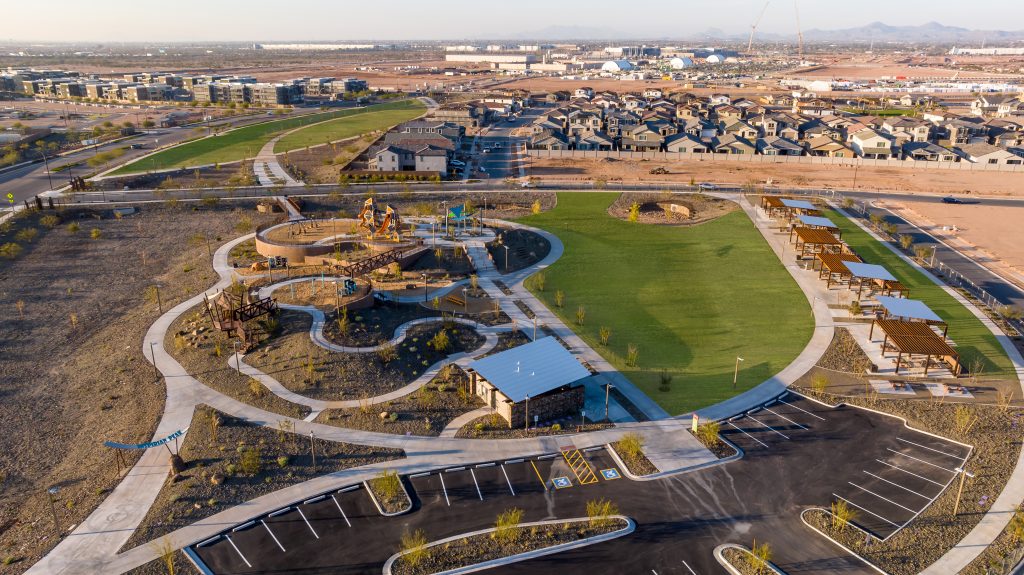
Located on the former General Motors (GM) proving grounds in Mesa, Arizona lies a 3,200-acre master-planned community that has artfully transformed the land into a sustainable, park-centric community. Eastmark seamlessly combines entertainment, community engagement, and a diverse population of residents. Brett Anderson, Vice President and Principal at RVi, led the team in creating a visionary design that is reshaping the future of the area.
“This project stands out for several reasons, particularly its mission to create a community inclusive of people from all ages and income levels,” said Brett. “Additionally, the team faced the unique challenge of revitalizing a barren desert landscape with little to no remaining natural vegetation—a challenge we embraced with determination and innovation.”
The Vision for Eastmark
Taking on the roles of landscape architect and planner and knowing the project would impact a diverse group of people, Brett and his team played a key role in community branding through detailed design and construction administration. His team also led the oversight process for builder reviews involving commercial developers.
Brett recognized the unique opportunity in the project from the beginning. “Based on the scale and location of this project, I knew it would create more equity for the area,” he said. “We knew it would balance housing options for a variety of demographic and economic needs, and we wanted to design it as such. It was a very thoughtfully designed space throughout the entire process.”
The Eastmark Great Park
That thoughtfulness is clear in the sheer number of amenities included in the community. A key feature of Eastmark is the 90-acre Eastmark Great Park, with Phase 3 through Phase 5 designed by the RVi team led by Brett. Recreational facilities and spaces include a skate park called The Deck, a disc golf course named The Disco, a dog park, playfields, courts, and the very impressive Experian Peak – a man-made mountain with scenic views that is the highest part of the community. Miles of streetscaping create a roadway system that organically filters people to the Great Park and other amenities.
“We’re proud to say there are over 75 neighborhood parks within a quarter of a mile of each home,” Brett shared. “We wanted to have the neighborhood parks be an extension of the front yard in order to encourage socializing, wellness, health, and play.”
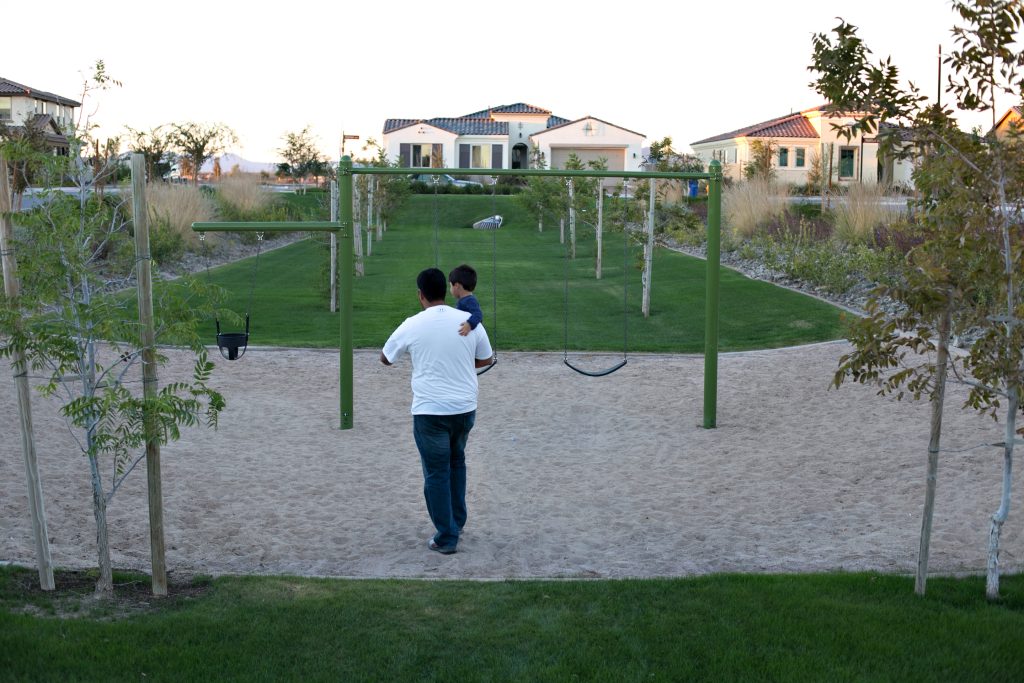
With easy access to more than 75 parks, residents can experience the benefits of better health and social connections.
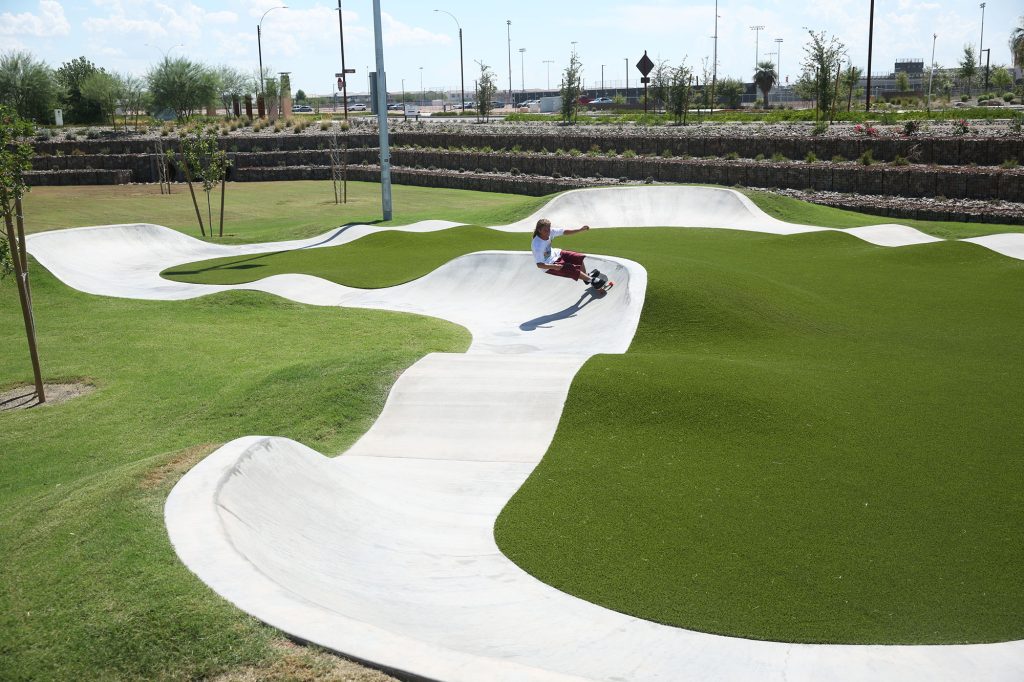
The Deck, Eastmark’s skate park, caters to varying styles and skill levels of skateboarding, with numerous shade structures, seating areas, and open green spaces.
Innovative Environmental Design
The community is already seeing incredible success, but getting to the finish line had its challenges. Building on former proving grounds required a central focus from the very beginning of the project: sustainability. The team planned a native, water-efficient landscape to preserve the area’s resources. They also developed an irrigation system for trees to foster long-term sustainability and prevent trees from blowing over by allowing deep watering to bring the roots down. Next, the team chose to look at the community as a part of the larger Sonoran Desert ecosystem.
“It’s a master plan, but the whole project is an ecosystem, and it needs to contribute to the greater ecosystem of the Southeast Valley and entire valley of the Sonoran Desert,” explained Brett. “Since it was the former GM proving grounds, it was an area that had to be restored. We had to be intentional about restoring the native plantings to the area.” The team accomplished this goal by bringing native flora to the perimeter of the community and working first-hand on the environmental efforts.
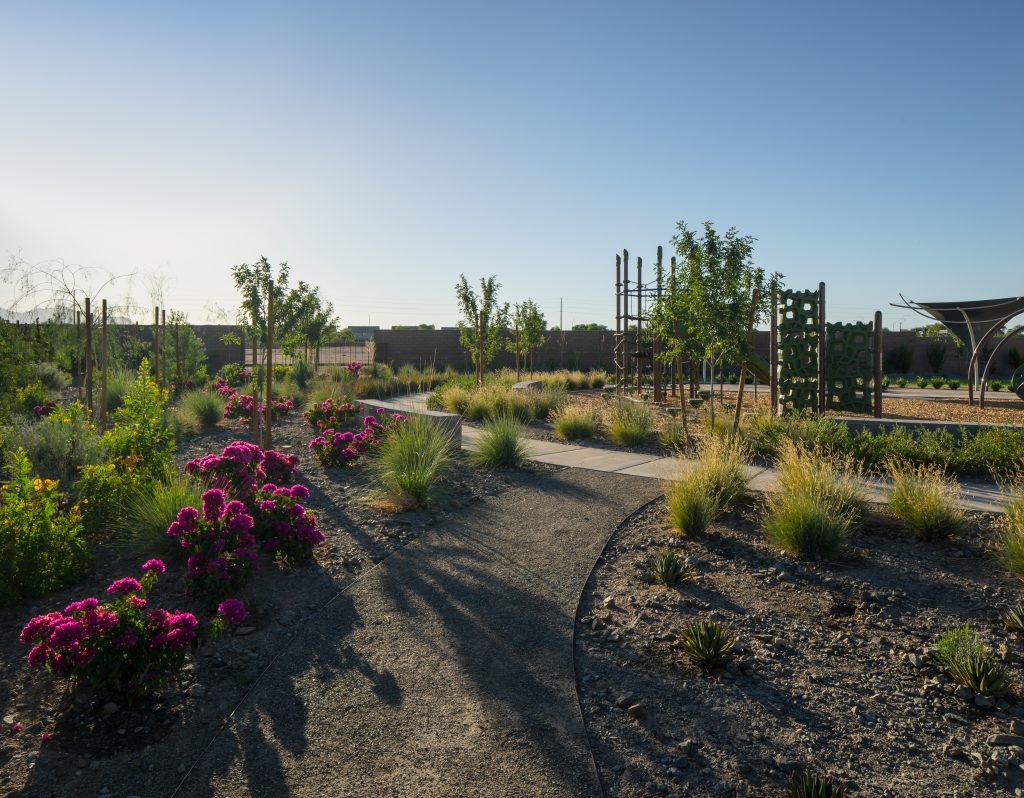
Native flora compatible with the Sonoran Desert ecosystem adorns the perimeter of the community.
Creating Equity and Connectivity
The project is reaching its final phase with the installation of high-tech facilities such as data centers spanning 1,000 acres. The recreational facilities are proving to have an impact on the surrounding areas, as additional master-planned communities are taking inspiration from Eastmark and its focus on connectivity and community. The central idea of the planning process was community, after all.
“Everything points to the parks, the community areas, and the idea of connecting,” stated Brett. “We designed the living portions of each house to push forward to the streets to foster connection and closeness to nature. With the community being ever evolving and with multiple generations, we connected tech with the community to create a lively hub for commerce and engagement.”
A Community for Everyone
Eastmark is built to cater to a wide demographic – multi-family, low-, medium-, and high-density homes are all included. There is a gated community component, workforce housing, and an active adult neighborhood with a roadway system filtering directly into the Great Park for ease of transportation and accessibility. There is even an organic working farm!
The design philosophy of the RVi team led by Brett fosters wellness and connection, with an abundance of neighborhood parks and a design that enables community members to relocate from one part of the community to another as their needs change. Families can grow without having to leave, and connections among neighbors can remain intact for years to come.
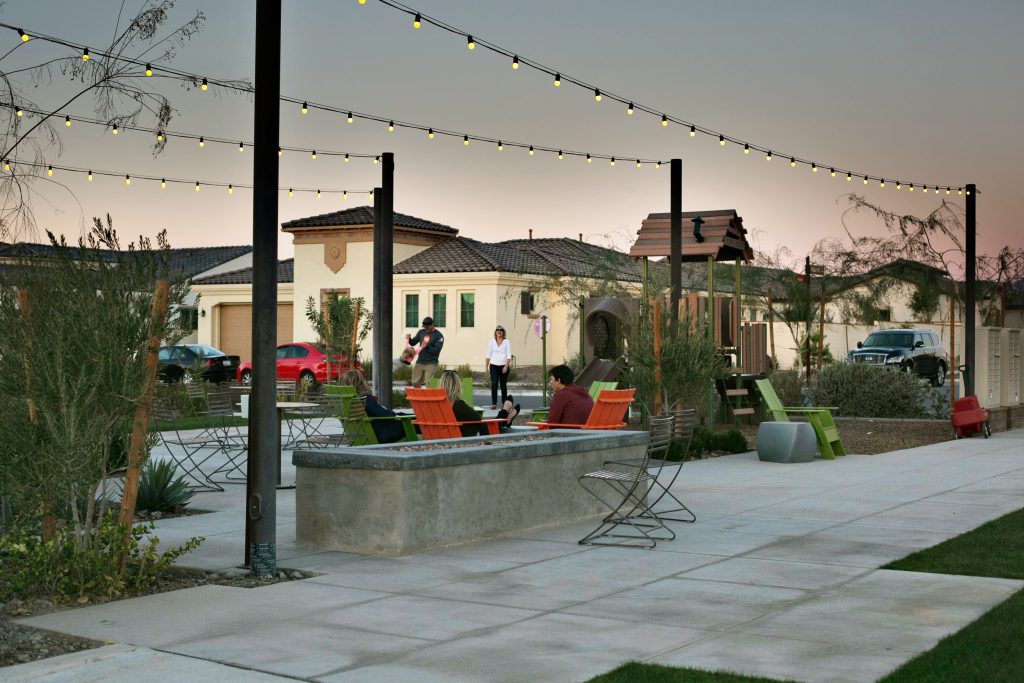
Eastmark was designed to cater to various family structures through multiple stages of life, ensuring residents have community wherever they choose to live.
Impact and Legacy
The neighborhood establishes a new norm for the area and projects in the Phoenix Valley. Brett and his team have been approached by other master-planned developers to design projects based on community sustainability.
“That’s a positive impact that we’re seeing,” said Brett. “The success is in people moving there and staying within the community. The idea was we would have different economic demographics and ages, so they could move from one place to another as they progressed in life. We’ve seen very positive responses from residents. The greatest compliments come directly from the residents who appreciate the community and clients proud of the community they built.”