
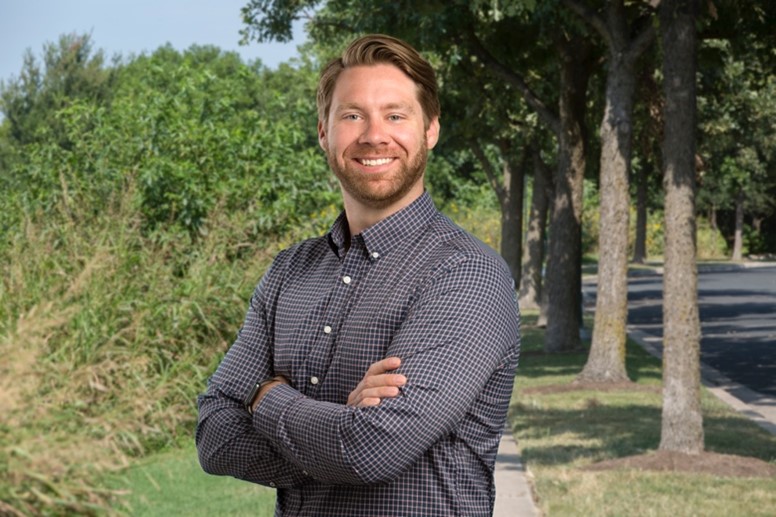
As a Senior Project Manager and Landscape Architect, Zerek Kroll is helping drive digital innovation at RVi. In this Employee Spotlight, he shares how nature and technology work together to inspire great places that come to life through collaboration.
What inspired you to pursue a career in landscape architecture?
In college, I thought I wanted to be an architect. I took an environmental design class where professionals in the fields of architecture, landscape architecture, and interior design came in to talk about their day-to-day. The landscape architect who came in talked about everything outside of the building—streets and urban spaces, trails, national parks—everything. Hearing that opened my eyes to a broader understanding of design and got me started on the path to landscape architecture. I always had a love for nature and the outdoors, and being able to design for the environment in a way that brought so many seemingly unrelated things together, that’s where I was drawn in.
How did you start getting involved in RVi’s digital innovation efforts?
Before joining RVi, I had been experimenting with 3D design tools in my work, but a lot of it was still done in a flat, 2D CAD space. When I arrived at RVi, I learned that a few team members had just finished Revit training, so I saw an opportunity to expand our use of these tools. I had the support of leadership to run with it on a multifamily development project at the time, which is being built now. That turned out to be really successful, and we’ve continued embracing new tools as they evolve, always looking for ways to better serve our industry, clients, and ultimately, the end users.
Could you tell me more about the digital tools you’re using?
We’re using Building Information Modeling (BIM) software, specifically Revit. BIM tools allow us to design in a 3D world where we can move around and interact with other disciplines, instead of working in a 2D environment. It has made our processes more efficient by improving collaboration across disciplines. Working in a 3D environment, we can see what others are doing in the design environment and work with structural, MEP, architects, and others in real time.
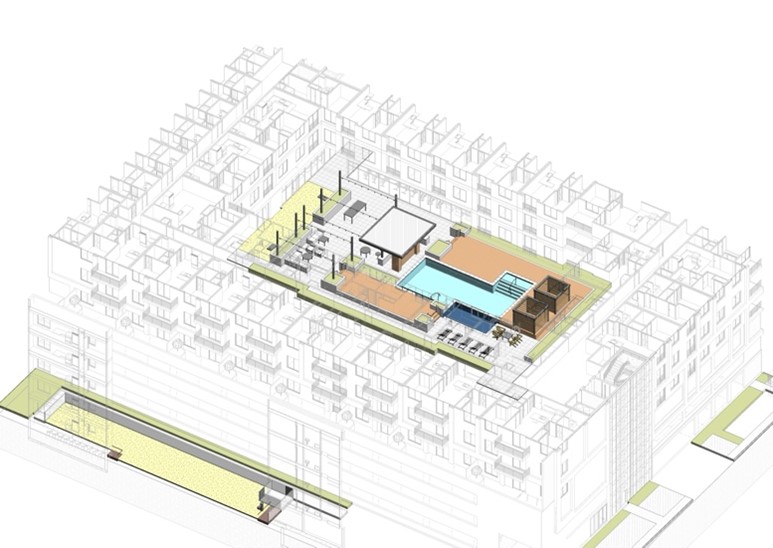
Kroll has helped advance the use of BIM tools like Revit, giving teams a three-dimensional environment to collaborate across disciplines.
How do you keep up with new innovations?
We come together regularly as a group and with our leaders to talk about new tools we’re using. When we’re trying out something new, the focus is less on the tool itself, and more on the impact it has. We’re asking, “how can we push our designs forward more efficiently? How can we collaborate and manage teams more effectively?”
Every year the software keeps improving. Revit wasn’t originally designed for landscape architecture, and so the features have really picked up as more designers continue to use it. Whether it’s topography or planting tools, it’s helping us communicate our designs both internally and externally with clients. Being able to render 3D models for client input and public engagement helps projects come to life and allows them to give us better feedback to incorporate in the final design.
What made you choose RVi?
I first heard about the company when I moved to Austin about six years ago. I liked that there were opportunities to work on a lot of different project types, and there was a focus on bringing influences from the natural world while still encouraging innovation. It just seemed like a natural fit. I’ve been able to find the things I’m passionate about in landscape architecture and have some ownership over the processes and my own development.
Is there anything you wish the public understood better about landscape architecture and what it takes to deliver a project?
Landscape architecture is about so much more than plants and aesthetics. That’s a big part of it; it’s how people experience it most of the time, but there is so much that happens behind the curtain. As designers, we’re thinking about hydrology, ecology, infrastructure—even human behavior and psychology can drive our designs. We’re always working with intention and thinking about how all the parts can promote sustainability and the long-term health of people and their communities. When someone walks into a park and has a great experience, it’s so rewarding as designer to know how many decisions went into shaping that experience. We design with intention so that people can have great experiences.
Could you share a project that stands out during your time at RVi? What made it especially meaningful?
There’s one in particular, I can’t share much detail because it hasn’t been built yet, but it was the process and collaboration that stands out and speaks to what we’ve been talking about here. It was a project in the hospitality and entertainment sector, where there was so much energy working with the architect and client. Every meeting we just went back and forth with new ideas, constantly asking ourselves, “how does someone have the best time here?” We were diving so deep into the personal experiences of different user groups, like a family of four, or a solo traveler who only gets one chance to be there. How can we tailor it so that every group has an amazing experience? When you find that shared passion with the client and other designers, it translates into a great project.
What are you passionate about outside of work? Do those interests inform your professional life at all, or vice versa?
I enjoy travelling, live music, and spending time with my wife and our two German shorthair pointers. I love spending time outside, and it’s part of why I’m always influenced by the natural world. I enjoy anything having to do with hunting, fishing, camping—anything outdoors. It really inspires me, so I try to hold onto that respect for nature throughout everything I do.
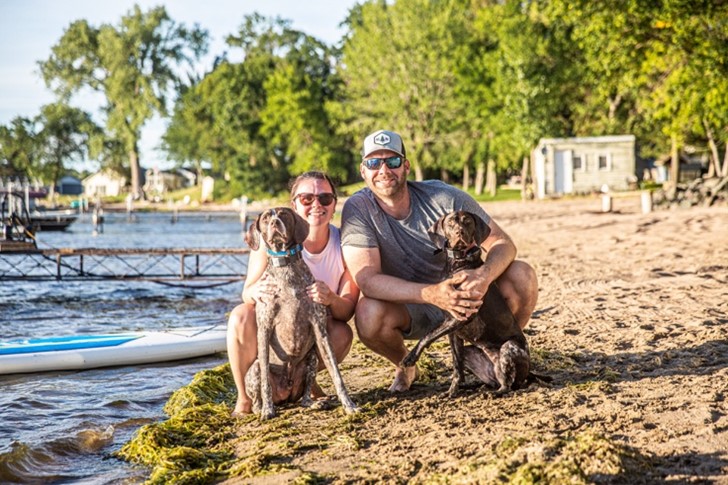
Where recreation and inspiration collide, Kroll enjoys spending time outdoors with his wife, Allyson, and their German shorthaired pointers.