
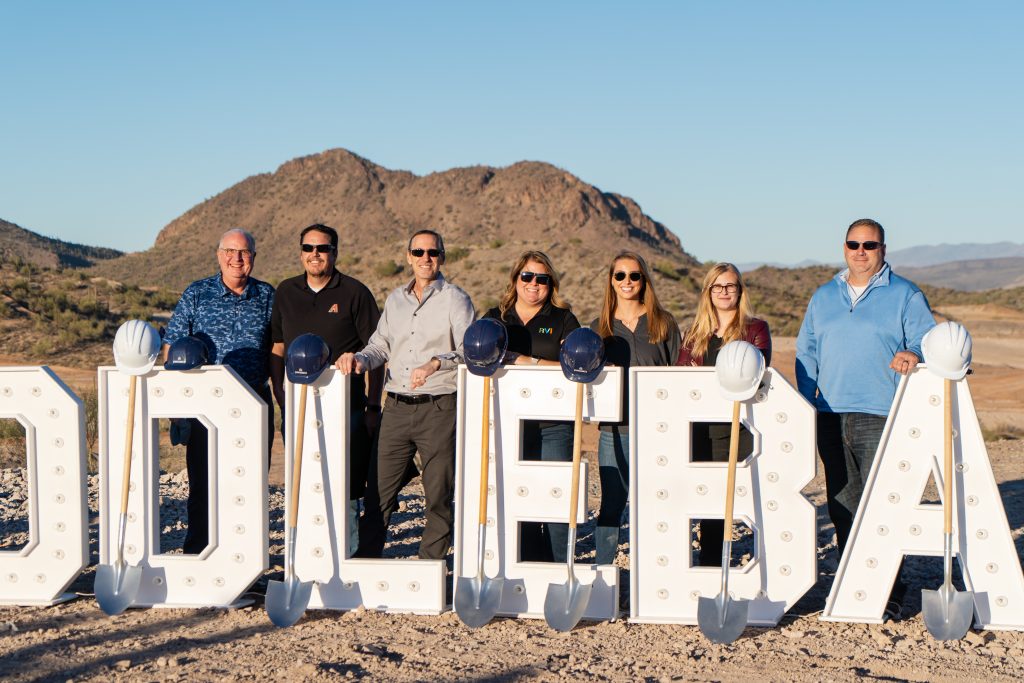
Featured image courtesy of LIV Photography by Jen.
Just a few miles north of Phoenix, in the foothills of North Peoria, Arizona, Saddleback is a 5,300-acre community immersed in the pristine Sonoran Desert landscape.
At its core, Saddleback is a landmark master planned community shaped and influenced by the unique desert landscape. From its network of trails to its preserved open spaces, Saddleback was designed to immerse residents in the surrounding terrain—not simply as a view, but as a vital part of everyday life and as an extension of the region’s rich heritage.
RVi is supporting client Castle Hill Partners through landscape architecture, including the preservation and replanting of thousands of native trees, cacti, saguaros, and other native flora. More than a development, Saddleback reimagines what it means to live in the desert, where natural beauty, outdoor access, and thoughtful design come together to create something truly exceptional.
Extensive Trail Network Connects People to Experience, the Land, and Each Other
Saddleback is organized into approximately 14 “villages,” planned for release to homebuilders in phases by Castle Hill Partners. This approach supports a diversity of housing options while maintaining a unified vision centered on outdoor living and desert design.
A defining feature of Saddleback is its extensive trail system, connecting each village to the broader landscape and to one another. RVi’s team, led by Project Manager Kelly Uhrich and Director Katie LaBelle, is designing over 60 miles of trails for hiking, mountain biking, and walking.
“One of our first goals was to create a community where everyone could walk out their front door and be on a trail within minutes,” said LaBelle. “It’s part of our design theme: Alive in the Desert. The idea is to make nature so accessible that it becomes part of daily life.”
While the trails will connect neighborhoods, parks, scenic overlooks, and natural preserves throughout the site, they’ll also connect people to experiences that create an even stronger sense of community. Whether it’s a morning hike that leads to an overlook with a vast view, a family bike ride to the amenity center, or a quiet picnic at an intimate clearing off-trail, these everyday moments become meaningful through proximity to nature.
Gathering areas anchor the community, with neighborhood parks and shaded overlooks designed to encourage community interaction and appreciation of the desert environment. At the heart of it all will be the Base Camp Amenity Center.
“Base Camp is going to be something special,” said LaBelle. “Picture a coffee shop with a shaded rock patio, splash pads for kids and families, and community events framed by surrounding desert.”
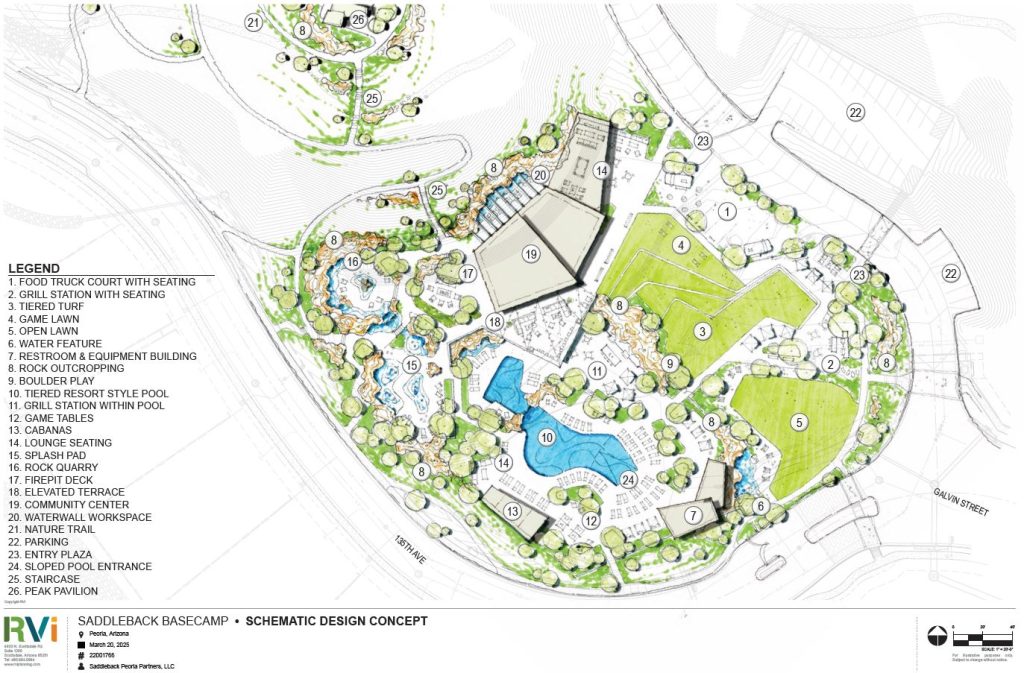
Plans for the Base Camp include a seated food truck court, splash pad, water wall workspace, and community center.
Respecting and Preserving the Desert
A cornerstone of this effort is a robust native plant preservation and replanting program, led in partnership with Native Resources. Thousands of plants—including centuries-old saguaros, palo verdes, and ironwoods are being carefully geotagged, relocated to an on-site nursery, and nurtured until they can be thoughtfully reintroduced throughout the community. The team maintains a detailed inventory to track and guide where each plant will be used.
Designing with the land—not against it—has guided every decision. The preservation and replanting process is a reflection of that commitment and a tribute to the desert’s unique ecology.
“Some of these saguaros are over 30 feet tall with up to 20 arms, so finding a new home for them has been a challenge, but also a fun one,” said LaBelle. “The process is fairly routine in this region, but with a project of this scale, it adds a whole new level of coordination, and our team has done a great job managing it.”
Living Lightly on the Land
Despite the project’s large scale, Saddleback’s environmental footprint is intentionally modest. Large areas of the site remain undisturbed open space, and wherever possible, development hugs the contours of the land to minimize grading.
The mountainous terrain has created grading challenges that RVi’s team has carefully navigated in coordination with city requirements. The scope of this project is a first for the city, in both size and design, so thorough communication and education have helped the team better partner with city stakeholders. From understanding how to design around solid rock formations to identifying replanting opportunities, RVi’s team has worked closely with the city to keep them engaged and informed at every stage.
“We are trying to make the smallest impact possible in order to maintain the desert’s natural character while following a more unique approach to community design,” explained LaBelle. “But the vision is strong, everyone is invested, and we are all working together well to bring that vision to life.”
Designed for the Future
The timing for Saddleback couldn’t be better. With growth surging in North Peoria and the nearby Taiwanese semiconductor plant (TSMC) bringing tens of thousands of jobs to the area, Saddleback is poised to meet the rising demand for housing that prioritizes both lifestyle and location.
Additionally, the community is just six miles away from Lake Pleasant, one of Arizona’s largest lakes. That kind of access is a rare luxury in Arizona and offers more opportunities for connection to nature and recreation.
“We’re not just building homes; we’re building an experience—one where nature isn’t just a backdrop, it’s the main feature,” said LaBelle. “Our goal is to help people feel alive in the desert and create an emotional connection unlike anything else in Arizona.”
Development began in 2022, with the first homes expected in late 2025, marking the start of a new chapter in desert living.