
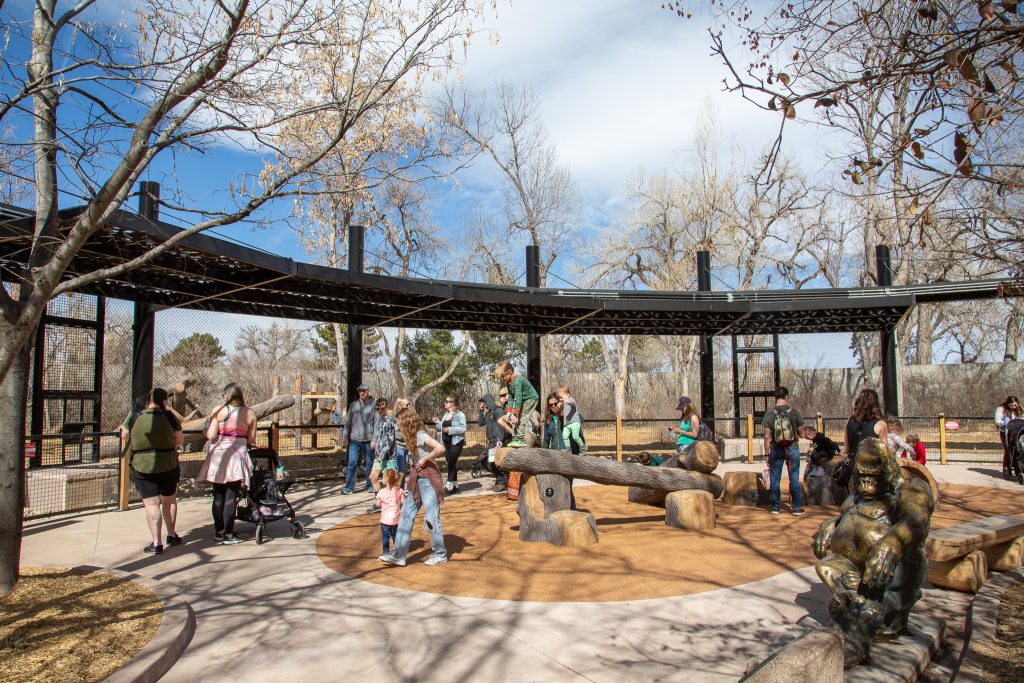
At RVi, we believe great design connects people to place—and to the animals that share it. That philosophy came to life through an immersive new project with the Denver Zoo Conservation Alliance, where our team helped reimagine and enhance the Zoo’s gorilla habitat, creating an experience where humans and gorillas can engage, interact, and learn from one another.
The newly refreshed Gorilla Habitat, located within Denver Zoo’s Primate Panorama, reopened in March 2025, and features design enhancements contributed by RVi’s Denver team. Led by Principal Craig Russell and Landscape Designer Shelby Waddell, the team focused on improving the visitor interface—crafting a more immersive, welcoming, and interactive experience for guests while supporting the Zoo’s high standards of animal care and welfare.
The centerpiece of the design is a dual-sided play zone—one side designed for humans, the other for gorillas—with mirrored elements that reflect the shared behaviors of both species. The intent: to spark curiosity and deepen understanding between guests and the Zoo’s Western lowland gorillas, Gunther and Kal.
“We’re both primates,” said Shelby. “So when guests interact with activities in the play area, it encourages the gorillas to come closer to the interface. Our goal was to make the exhibit more open and transparent—so people feel like they’re part of the habitat, not just visitors passing by.”
The previous layout featured hard visual edges and limited interaction zones, but RVi’s redesign introduced a more open, bright, and accessible space. The new design eliminates visual blind spots, improves sightlines for programs like feeding demonstrations, and softens the atmosphere through materials and thoughtful spatial planning.
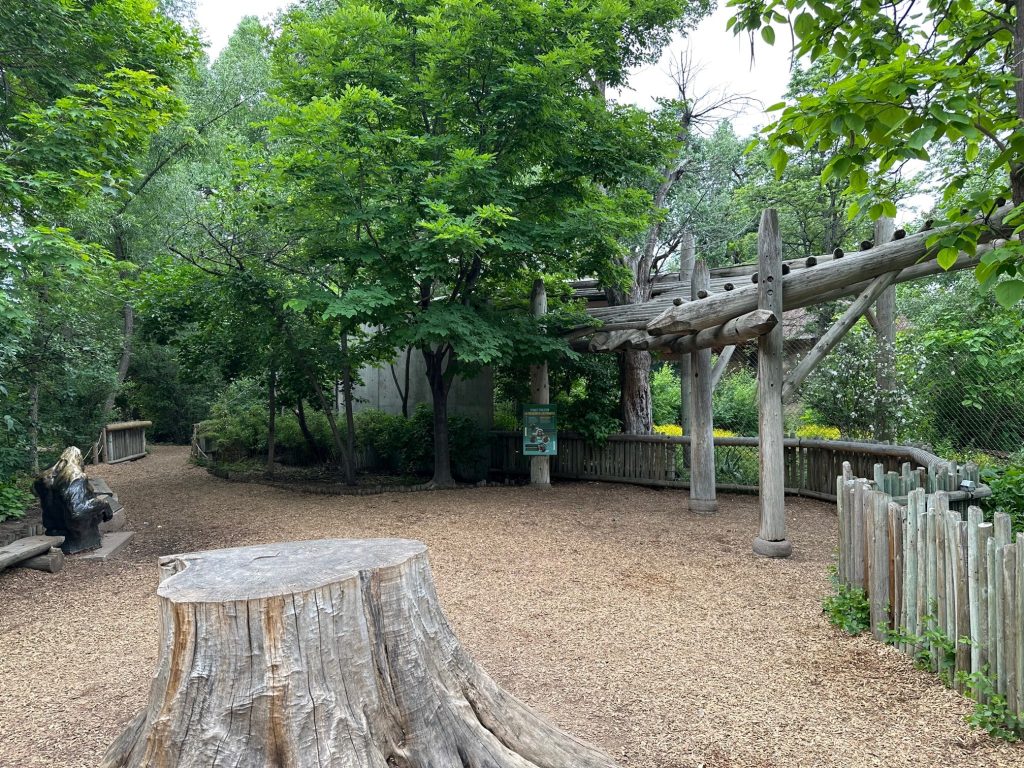
The previous layout had limited interaction zones and hard visual edges.
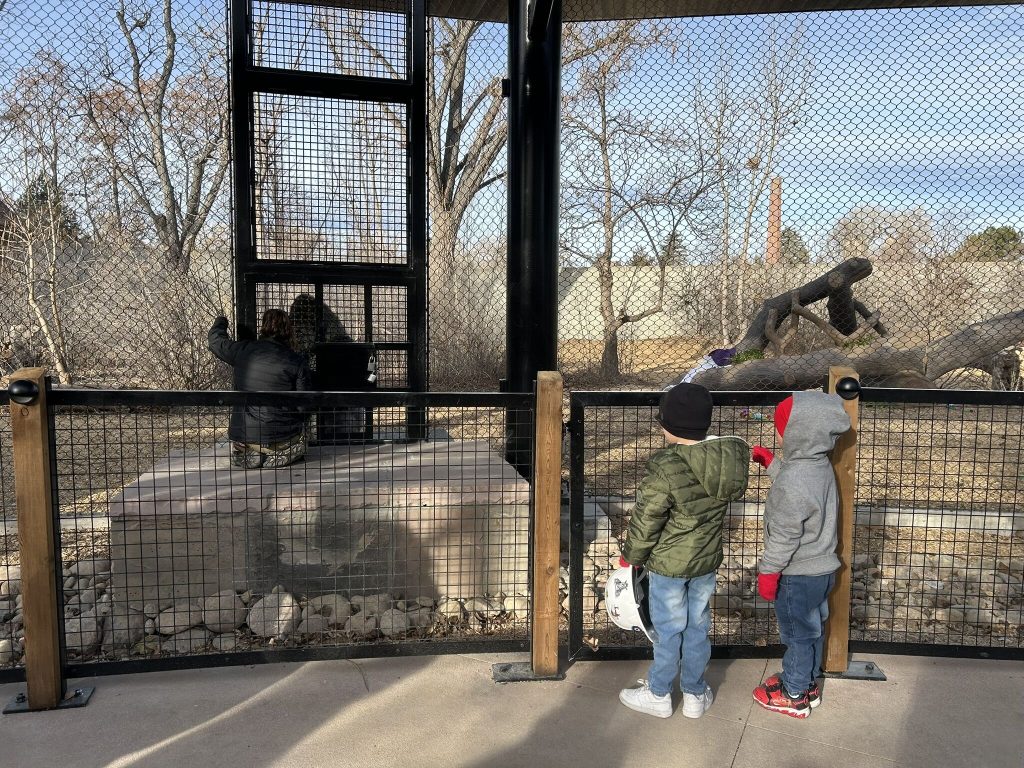
RVi’s team redesigned the exhibit to be brighter, more open, and more accessible.
One key design feature is the incorporation of a “working wall”—a zone where zookeepers can safely conduct health checks, offer enrichment activities like toys and treats, and facilitate meaningful animal-guest interactions.
Shading and thermal comfort were also critical design considerations. A comprehensive shade analysis revealed that the gorillas naturally gravitated toward cooler areas within the habitat. In response, the team introduced a perforated roof structure that mimics the effect of dappled sunlight through tree canopies—providing a more inviting, comfortable environment for the gorillas while enhancing the experience for guests.
“We had to dig into guidelines set by the Association of Zoos and Aquariums (AZA) to ensure the dimensions, materials, and exposure levels were just right,” said Craig. “Every element—from the roof height to the placement of features—had to meet safety, behavioral, and structural standards.”
With gorillas weighing up to 600 pounds and capable of jumping or swinging with impressive strength, the team paid special attention to buffer zones, material tolerances, and spatial relationships. Every touchpoint—from how steel mesh was fastened to concrete walls, to the positioning of enrichment features—was designed to be both secure and visually integrated.
“This wasn’t just about aesthetics,” Craig added. “It was about creating an environment that’s enriching for the animals and engaging for people—without compromising safety or functionality.”
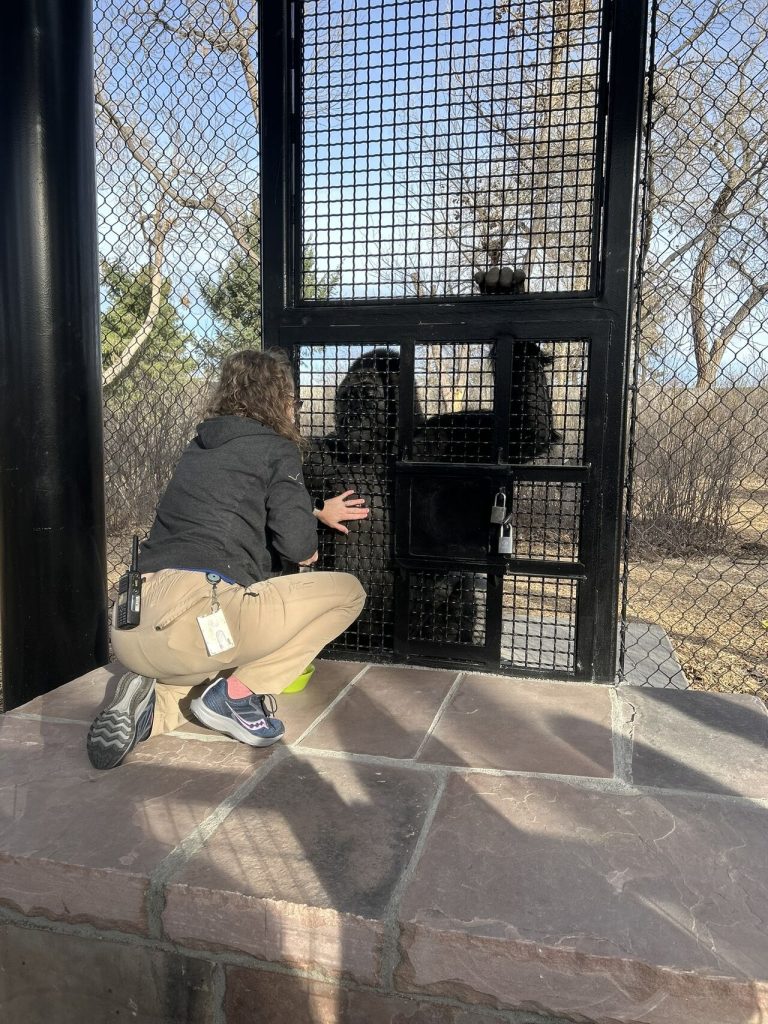
Zookeepers can safely examine the gorillas thanks to the inclusion of a working wall.
Through weekly collaboration with the zookeepers, veterinary staff, and facilities team, RVi gained deep insight into the gorillas’ needs, behaviors, and personalities. That human-animal connection shaped every design decision—from queueing space to quiet zones—resulting in a space that’s equal parts educational, interactive, and inspiring.
RVi is proud to have contributed to this one-of-a-kind project—a habitat that blends science, compassion, and design innovation. It stands as a testament to what’s possible when we design with empathy, creativity, and respect for all life—human and animal alike.