
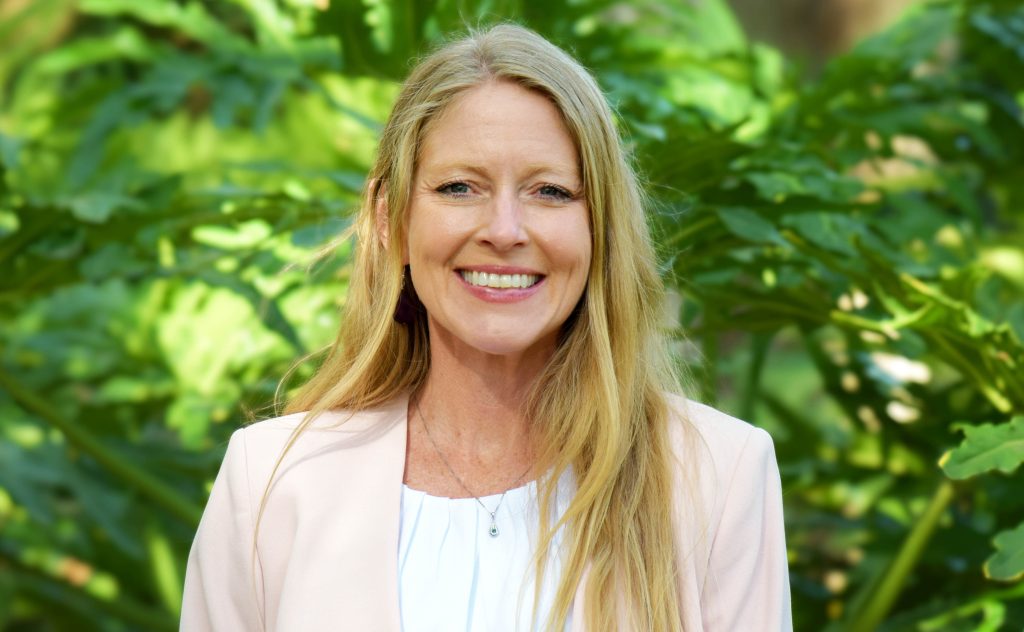
Hannah McAleer is Director of Landscape Architecture at RVi. Based in Tampa, Florida, she has more than 20 years of experience that includes mixed-use developments, neighborhood parks, master planned communities, and more. In this Employee Spotlight, Hannah shares her most memorable projects, advice for future landscape architects, and how she actively gives back to her community.
What inspired you to pursue a career in landscape architecture?
Hannah: I am drawn to the stories embedded in place. Growing up in the southeast, we would travel across small-town landscapes to visit family. As we passed through each town, my dad would share stories about almost every town we crossed – some folklore, some completely fictional, and some meshed with his own memories of a place. I also grew up listening to my grandfather’s stories of travelling in the Air Force and was fond of how central the geography, landscape, and architecture were to the memory. I was interested in architecture, but university programs tended to focus on the building form, whereas I was far more interested in the experience that a space could create. Over several conversations with Auburn University’s Chair of Landscape Architecture, and after attending one of his classes, I switched my major for the fourth time and landed in the Landscape Architecture Master’s program.
What is the most memorable or meaningful project you’ve worked on?
Hannah: One that sticks out is Harbour Isle. I worked on initial land planning, creating a plan on the peninsula that amplified views of the surrounding bay, mangroves, and interior lake. I think what makes it so memorable is the amount of detail that went into research and specifications as we developed the plan. We planted the entire interior lake with wetland-edge plantings, creating a beautiful coastal native landscape. I went to tree farms to hand-tag specific specimen palms with various characteristics and determined the exact location and orientation of each specimen. We also coordinated with a local artist to create a mangrove fountain as a central park feature and view terminus from the wood bridge that bisected the interior lake.
Have you had any challenging moments in your career? If so, how did you overcome them?
Hannah: Shortly after college, I was entrusted with a lot of autonomy that forced me to dedicate extra time to learn new aspects of the profession and take on new responsibilities. I have found, throughout my career, that there’s always something to learn from every experience. I discovered that if you are open to it, the challenges you face allow you to grow.
What are you most proud of accomplishing so far in your career?
Hannah: I’m proud of the many opportunities I’ve had to grow a team at a few different companies. I’ve been fortunate to work alongside amazing colleagues where I’ve been part of creating a culture that is a collaborative environment where the team respects each other and we all learn from each other. Since joining RVi, I’m proud of the efforts and results to increase our diversity of clients and project types that align with our business strategy.
Besides the work you do with RVi, what are other ways you contribute to enhancing communities and experiences with nature and the outdoors?
Hannah: In the past, I’ve volunteered for nonprofits. For five years, I volunteered weekly at Clearwater Marine Aquarium. I enjoyed giving behind the scenes tours and found it rewarding to connect with people, often some with various disabilities, who were inspired by animals that overcame their own disabilities. I’m currently involved with St. Petersburg’s Edge District Association, which is a downtown district that has come to life over the last 10 years and is focused on the success of the small local businesses that make it so unique.
I’ve also been involved with Urban Land Institute (ULI) for about 12 years. I served on the Tampa Bay Trends Conference for the last eight years and am honored to be this year’s Co-Chair for the conference coming up at the end of February. I’m active with the Women’s Leadership Initiative (WLI), a member of the Mixed-Use Local Product Council, and participated on a Technical Assistance Panel (TAP) for Envisioning the Future of the City of Largo’s Municipal Golf Course. This past year, I served as a mentor for the Young Leaders Group (YLG) Mentorship program.
Another fun ULI passion of mine is Future Leaders in Planning (FLiP) program. FLiP is an initiative by Hillsborough County’s Planning Commission, targeted towards highschoolers interested in planning careers. Our ULI volunteer involvement started as a presentation about building healthy places, and has now evolved into a full-day planning exercise where the students apply the planning knowledge they’ve gained to a specific site.
That sounds awesome. Did you ever participate in similar programs as a student?
Hannah: I didn’t have access to these types of programs. However, a professor of mine said many times has stuck with me: “You learn so that you can teach, and you teach so that you can learn.” I think that’s powerful. I’ve learned a lot from mentors in my career, from the youngest to the oldest team members, from others in adjacent professions, and from clients.
What advice do you have for someone considering a career in landscape architecture?
Hannah: Be open to any experience, because you never know what doors it might open. Sometimes we’re set on a path, and when that path isn’t what is expected, it’s disappointing. However, if you stay positive and dedicated, that path can create valuable and unexpected experiences.
How do you maintain your passion for your work?
Hannah: I love creating places that become part of a person’s everyday life; places that contribute to great moments spent with family and friends, and become shared memories among family, friends, and neighbors.
As someone who loves traveling and being outdoors, what is one place in the world that gives you the same feeling of home and great memories that you strive to give others?
Hannah: Spring Bay, Virgin Gorda, in the British Virgin Islands. The landscape is incredible, and the blue water offers great snorkeling and swimming in a national park. The architecture of the area responds to the context of landscape so beautifully. The country has done an amazing job keeping the architecture responsive of the natural landscape rather than changing the land to fit the man-made elements. The land has a story, and after several times of visiting, this place has become part of my own personal story.