
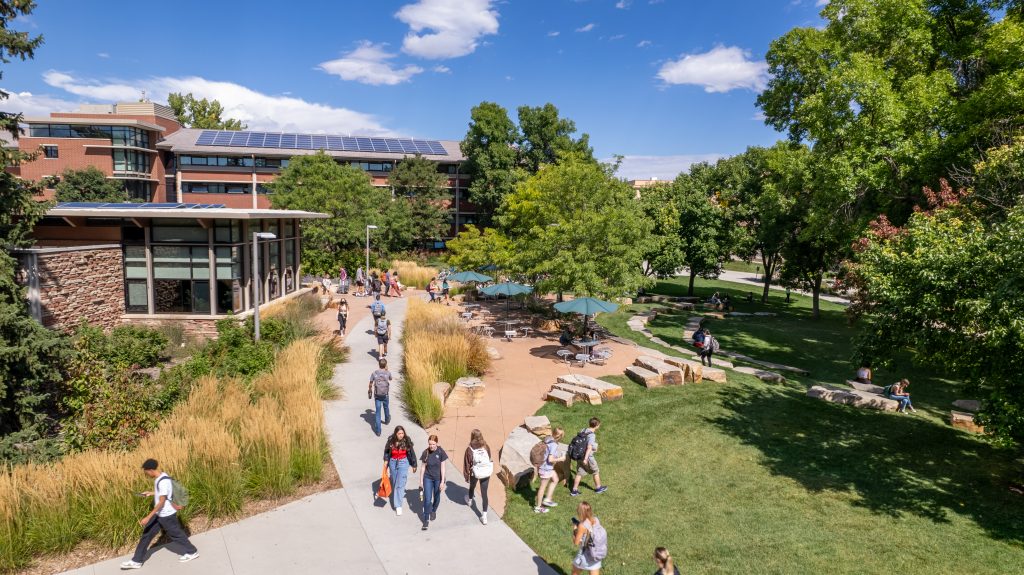
As RVi Planning + Landscape Architecture expands, so does its focus on Campus planning and design. Tony Catchot, Principal and Campus Sector Leader, is leading this effort with a clear vision and strategic approach. With over 40 years of experience, he knows what it takes to create campuses that foster learning, collaboration, and innovation.
We spoke with Tony about the opportunities, challenges, and long-term strategy for growing RVi’s Campus sector—and how he plans to position the firm as a trusted leader in this space.
What inspired you to be a Campus planner?
When I first graduated from college, I had no idea what Campus planning was all about. I started at RVi straight out of college. During that time, master planned communities, corporate office, and public work represented a substantial part of RVi’s work—and still do. I was fortunate to work with great mentors and helped create plans for what are now thriving communities.
At some point, I relocated within our office and found myself sitting near a group of folks working on a master plan for a major university in the area, and they looked like they were having a blast! Naturally, I wanted in. I started asking a lot of questions and offering to help. I guess the Campus team leader finally wore down and gave me a few menial tasks to keep me quiet. In those early days I was happy to just sharpen their pencils so that I had a seat at the table. Looking back, I never imagined I’d one day be leading a Campus planning practice, but I can’t think of anything more fulfilling.
What defines the Campus sector at RVi?
Our Campus focus includes higher education, innovation and research, healthcare, and corporate campuses. As someone who comes from a diverse background of experiences and a personal goal of being a constant learner, I view any project that has a collection of one or more buildings as a campus—an opportunity to create an interconnected community that encourages collaboration and discovery, all within an orderly, safe, and naturally well-conceived environment. While my career has been primarily rooted in higher education Campus planning and design, the skills I’ve developed over four decades are adaptable to many different market sectors and project types. We’re starting with a strong foundation at RVi, but our talent and flexibility will allow us to expand this sector in exciting ways.
What excites you most about leading RVi’s Campus Sector?
Watching RVi grow into a nationally recognized leader in planning and landscape architecture has been incredible. The firm has strategically expanded into high-growth cities and regions. This is an important detail as we consider how to grow all our market sectors, particularly the higher education component of the Campus sector. We’ve all heard the dire warnings about a shrinking student population in many parts of the nation. However, having offices, connections, and resources in high-potential growth areas (which are often cross-identified as cool, trendy cities that many students are attracted to) will hopefully mitigate some of the concerns about student population numbers.
It makes sense to presume that other firms have taken a similar approach. While this presents a challenge in terms of competition, it is also an opportunity for RVi to stand out by forming teams that can offer a more diverse and comprehensive set of experiences and services to our clients.
How do you plan to grow and scale RVi’s Campus sector?
Growth will be an iterative, strategic process with the full support of the firm. We have a clear vision and specific strategies to get us there. We’ll continue to build the team’s capabilities and expertise, adding bench strength where needed. I think it’s important to understand that while we are incredibly effective as leaders of a project, we bring just as much value in supporting roles as well. As we scale up, I’m confident we can and will be very effective team members in any capacity.
Continuous improvement in technology and investing in product development will also be key. Additionally, we will raise our brand awareness and engage with clients and industry partners through social media, networking, and thought leadership.
The most effective strategy is to get out there! Our team enjoys active engagement – preferably in-person meetings where ideas can be exchanged in real time. We don’t shy away from a conversation or a challenge where we can use our strengths in creativity and collaboration to come up with amazing ideas and solutions.
How does your approach to Campus planning and design stand out from others?
I was fortunate to be trained by people who are considered the founders and proteges of Campus planning and design. Like many in Campus leadership positions, I come from a planning and design background. However, what sets me apart is my experience on both sides of the table—as a consultant and a client, in both the private and public sectors.
After nearly 30 years as a consultant, I took on a role as Assistant University Planner at the University of Michigan (UM)—a move I initially saw as a two-year sabbatical, but that turned into a 10-year career. That experience completely shifted my perspective. What I once thought were the top priorities for Campus planning as a consultant didn’t always align with those of the client. It gave me a deeper understanding of how institutions operate and what they truly need from their planning and design partners.
This dual perspective is what makes my approach unique. I’ve been involved in every facet of Campus planning and design within a university setting, allowing me to anticipate challenges, align priorities, and create solutions that truly serve the client’s mission. My colleagues may wonder why I ask so many questions from the client side of my brain—but in the end, I think they appreciate it.
How has being a former client shaped your leadership at RVi?
At the University of Michigan, I had the opportunity to observe many design professionals in action. The most successful ones took the time to truly understand how we, the client, operated—how we thought, what mattered to the institution, and how decisions were made. We always insisted that landscape architects be included on every architecture project team, ensuring that each project contributed to the campus as a whole, rather than functioning as a one-off project.
Now that I’m back on the consulting side, I have a deeper understanding of the client’s perspective and how planning and design teams can best support them. I approach every project with a client mindset—whether I’m hands-on, reviewing, or leading a task. Our clients are smart, engaged, and becoming more hands-on than ever. To truly be their trusted advisor, we need to bring value to the table—not just wait for direction, but anticipate needs, offer insight, and help shape solutions.
How do you plan to develop and attract top talent to the team?
Mentoring and helping others grow into strong professionals and future leaders is something I truly enjoy. It’s rewarding to know that I’ve had, and will continue to have, opportunities to guide and support staff at all stages of their careers. Ideally, someone I mentor today will either take my job one day or become a client and hire us! The goal is to foster both professional and personal growth.
When it comes to attracting new team members, I believe in leading by example and showcasing the incredible culture at RVi—the same culture that first drew me in years ago and continues to inspire me today. RVi is built on collaboration, shared values, and a commitment to excellence, creating an environment where people can thrive and do their best work.
What sets RVi apart is its commitment to mentorship, continuous learning, and professional development. From structured training opportunities to a thoughtful onboarding process, the firm invests in its people. I feel valued and appreciated here, and I fully intend to pay that forward by creating an environment where others feel the same.
What challenges do you foresee in expanding RVi’s Campus sector?
Challenges are inevitable, whether you’re growing an established Campus planning and design group or building one from the ground up. Competition is particularly strong in higher education, with firms that have specialized in this space for decades. Having been part of the leadership of one of those firms, I know firsthand what it takes to be among the best. Success requires a dedicated, strategic team, which is why we’re being intentional in recruiting and team development.
We also need to stay aware of how other firms integrate Campus planning and design with complementary services and leverage RVi’s broad expertise to provide holistic solutions. With our strong reputation in planning and design, we are an attractive partner, but staying at the forefront means continuously refining our analytic tools, engaging with industry leaders, and adapting to evolving needs.
Ultimately, success isn’t just about strategy and execution—it’s about people. Building authentic relationships, supporting ideas, and staying connected with both clients and our team are just as critical as technical expertise. It takes effort, but it’s what truly makes an impact.
What keeps you passionate about this work and how do you stay current with new trends?
I thrive on engaging with stakeholders, brainstorming ideas, and leading discussions where solutions take shape in real time. I especially enjoy tackling challenges that seem impossible at first—helping clients turn problems into opportunities through strategic design thinking. That process, both individually and as a team, keeps me energized.
One of the most important lessons I’ve learned is the value of being a lifelong learner. I may not be the best at something, but I make it a point to learn as much as I can about it, always looking for ways to help clients and teammates navigate challenges. Early in my career, I struggled with public speaking and confidence to share my ideas, but I knew that by pushing myself, I’d continue to grow. Progress happens when you stay curious, committed, and dedicated to helping others succeed.
Any closing thoughts?
I appreciate the opportunity to share my background and vision—and how the past is informing and shaping the future of RVi’s Campus sector. I’d love to continue the conversation by inviting our other subject matter experts to share how their roles in Campus planning and design are shaping learning environments in different settings.
I’m particularly passionate about how our work impacts the community and environment, whether in higher education, corporate, research, or health and wellness settings. Campus planning and design plays a direct role in shaping educational experiences—it can make learning more inviting, approachable, and engaging. If we do it right, our work doesn’t just enhance a campus—it can influence careers, inspire respect for the environment, and leave a lasting impact for years to come.