
Author: Rachel Hendry
Build to Rent Brings Opportunities for Both Developers and Residents
The single-family build to rent market has gained significant momentum in recent years. Single-family BTR delivers a rental option that combines the privacy of a single-family home, the flexibility of rental housing, the convenience of professional property management, and all the modern amenities associated with newer homes. These communities serve as another housing option for renters whose lives have outgrown the traditional apartment unit, but where renting is still the best fit financially.
The past decade has shown a clear shift away from homeownership and into renting, particularly among older and higher-income households. Developers are bringing single-family BTR communities to the market to meet this new demand, and supply the type of housing today’s renters find most desirable.
As a Senior Project Manager at RVi, I have experience working on BTR projects, and realize that BTR is a niche that not everyone is familiar with. I’ve noticed some common design traits that exist in the typical single-family BTR project, and want to educate others about these qualities, who BTR is best suited for, and challenges and future trends in the market.
Who’s Renting?
Homeownership remains the overwhelming desire of Americans. In a survey released by Bankrate last year (https://bit.ly/4bNxieZ), 74% of Americans called homeownership a part of the American dream. But the percentage was lower for younger adults, many of whom cited high prices, low inventory, and an inability to save for a down payment as barriers. Meanwhile, renting has been destigmatized as the quality, variety and locations of units have evolved.
Millennials who can’t afford to buy—or who aren’t ready to be tied to a location—aren’t the only ones being targeted by BTR companies. These companies are also marketing to aging baby boomers, who might want to eliminate chores and costs, and to people hit by unexpected life changes, such as divorce or death, who want to gain an instant community.
Who’s behind the Trend?
Developers and builders who have specialized in submarkets such as multi-family, active adult, senior housing, student housing, and vacation homes, are all dipping their toes into BTR to diversify their portfolios.BTR represents a high-performance asset class offering faster lease-ups and lower turnover than apartments. Investors also see the wisdom of pumping in capital, sometimes through partnerships.
Ideal Locations for BTR Developments
To date, locations that appeal are found in the “Smile States,” so named because of the smile shape they form. These states stretch from California and through Arizona, Colorado, Texas, and the Southeast U.S. These areas offer job growth; lower land, tax and living costs; good weather; and an influx of residents.
What’s Being Built
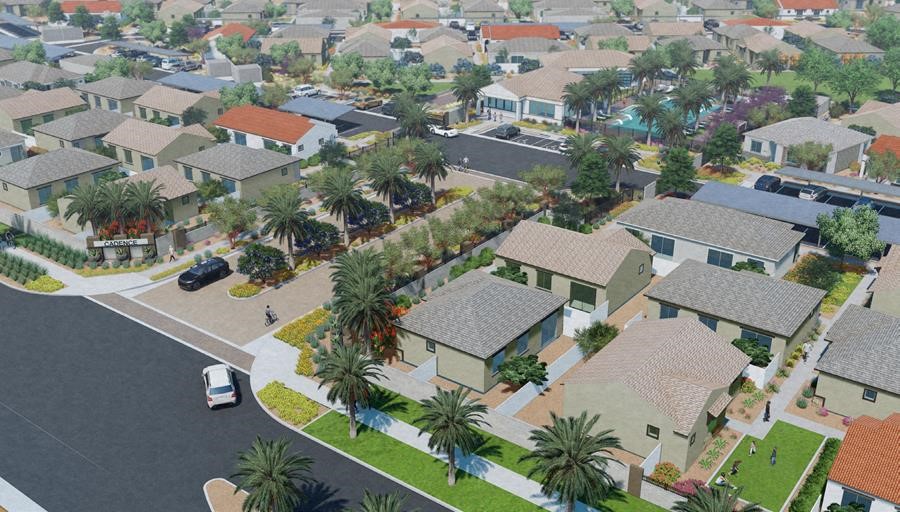
The average BTR community consists of 120 to 130 homes, but there’s no single development model. For example, one of RVi’s leading land development and home building clients looks for 10- to 30-acre parcels where it can place 100 to 300 homes. Some developers go larger and make BTR part of a master-planned community with other housing types. Some go smaller with only 25 or so homes. A builder in a traditional for-sale community of single-family housing might also sell a few homes to investors for the purpose of renting to families not yet ready to buy.
When it comes to materials and furnishings, the goal is to mirror for-sale housing and Class A apartment buildings, while tailoring choices to each market. Common denominators are quartz or granite countertops, stainless steel appliances, luxury vinyl tile, smart thermostats and doorbells, strong Wi-Fi connectivity, and fresh color palettes. Some even includes doggie doors if the majority of residents owns a dog.
Amenities in BTR Communities
Another way some builders set themselves apart is by incorporating a clubhouse or other typical multifamily amenities, such as a pool, gym, tot lot, bark parks, nature trails, business centers, multipurpose rooms, and in many cases, car and dog washes and pickleball and tennis courts. Some builders decide on amenities market by market, based on what’s important to residents and the cost benefit to the company. For some developers, the tipping point may be the size of the community.
Challenges In Design
One of the challenges in designing a single-family BTR project is providing the correct ratio of units on the site with parking, the desired amenities, and open spaces that will create a great community to live in. Providing private yards for each unit, smaller landscape areas, and intimate courtyards typical for a single-family BTR project creates other challenges of grading, drainage, and maintenance. Keeping these in the forefront during the design process helps the longevity of the property with ease of maintenance and aesthetics.
Long-term Outlook
The question is whether developers, builders, and investors will hold onto communities, sell them as an entity or piecemeal, or convert them to for-sale housing. The current strategy for some of our clients is to sell a community when lease-ups hit 90%, but it remains flexible as the real estate environment is ever-changing.